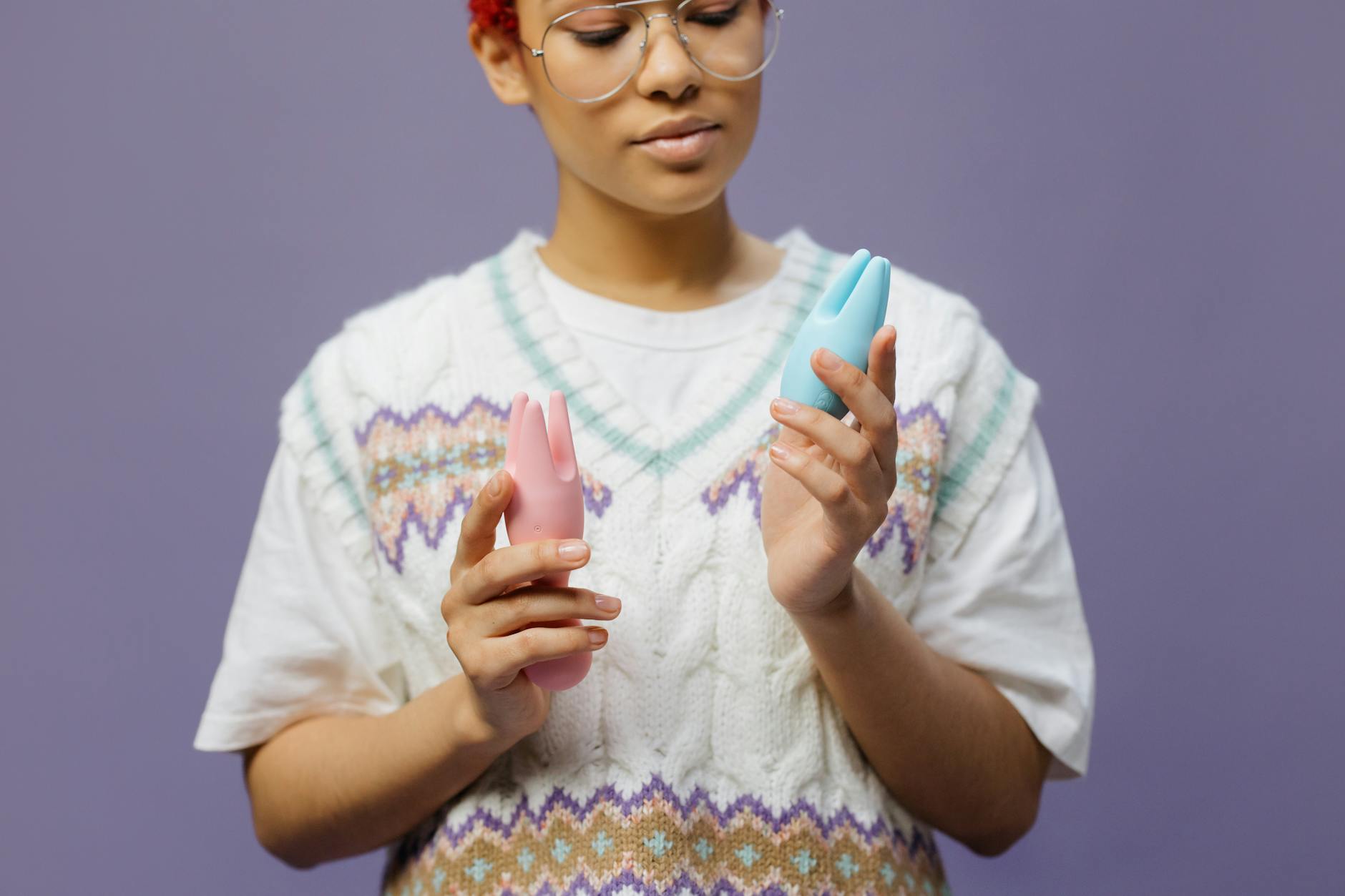
Let's talk about pain that keeps you from pleasure
Vulvodynia and chronic pelvic pain are not rare. They affect 16% of women at some point in their lives, and the isolation around them is part of the injury. You get told to "just relax" or that it's "all in your head." Then you're left wondering if pleasure is even possible anymore. Spoiler: it absolutely is. But it requires a different approach.
Most vibrators make vulvodynia worse. The constant buzzing, the friction, the direct pressure on already-sensitive tissue. It's not your fault. It's the tool. A lemon clitoral vibrator works on a completely different principle, which is why so many people with chronic pelvic pain find them genuinely helpful.
Why traditional vibrators often trigger pain
A standard vibrator relies on oscillation (back-and-forth buzzing) or rotation to create sensation. For people without pelvic pain, this feels good. For people with vulvodynia or central sensitization, it can feel like electric shock, needles, or unbearable pressure. Here's why: your nervous system is already primed to perceive threat at that site. Repetitive mechanical stimulation can amplify that signal instead of overriding it.
Direct pressure on sensitized tissue also activates pain pathways faster than pleasure pathways. The vulva has two separate neural systems. Pain travels fast. Pleasure takes time to build and requires gentleness first. Traditional vibrators skip gentleness.
Suction-based technology, like the lemon vibrators made by Hello Nanc, works differently. Instead of vibrating against tissue, suction creates a gentle pulling sensation that stimulates nerves without direct friction or sustained pressure.
How suction feels different from vibration
When you use a lemon clitoral vibrator, you're not hammering pleasure into your body. You're inviting it up through a different door. The sensation is more like a gentle, rhythmic pulse that builds slowly. There's no friction. There's no assault. Your nervous system doesn't register the same threat signal.
For people with vulvodynia, this matters enormously. The suction sensation often feels diffuse rather than localized. That means the stimulation isn't concentrated on the exact spot that hurts. It's spreading the sensation across the broader clitoral complex, which includes nerve endings that might not be irritated at all.
Many people with chronic pelvic pain describe suction vibrators as "finally something that doesn't make me flinch." That's not placebo. The mechanism is actually different.
What to look for in a lemon sucker if you have pelvic pain
Not all suction toys are created equal. Here's what matters:
Intensity control that starts very low. You need a vibrator with at least 3-5 settings, and the lowest setting should be genuinely subtle. Some lemon vibrators have whisper modes that feel like barely-there pulses. Start there. You can always turn it up. You cannot untrigger pain.
Soft silicone that doesn't pinch. The rim of the suction cup should be plush enough that it doesn't dig into tissue. If the edge is hard or sharp, skip it. Your already-sensitive vulva doesn't need anything rigid.
A size that fits you comfortably. Bigger isn't better here. A medium or smaller cup mouth means you can control exactly which area gets stimulation. You're looking for precision, not coverage.
Waterproof design. Not for the bathtub so much as for easy cleanup. You might need to use water-based lubricant generously, and a waterproof toy means you can rinse thoroughly without worrying about electronics.
The role of lubrication with pelvic pain
Vulvodynia often involves reduced natural lubrication or tissue that feels raw even when wet. A good water-based lubricant is not optional. It's part of the setup. It creates a barrier between the toy and your tissue, reducing friction even further. It also signals to your nervous system that this is a slippery, safe situation, not a threat.
Apply lubricant generously. More is better. Reapply halfway through if you need to. The goal is zero friction, zero surprise resistance.
How to use a lemon vibrator safely with vulvodynia
Start with zero pressure. Before you even turn it on, hold the lemon vibrator against your vulva with the absolute lightest touch. Get familiar with the sensation of the cup against your skin. This is grounding. Your nervous system is learning that this object is safe.
Then turn it to the lowest setting. Let it run for 30 seconds. Notice what happens. Does it feel okay? Does your body tense up? Pain is a signal. Listen to it. If it hurts, turn it off. You're not being weak. You're being smart.
Many people with chronic pelvic pain find that suction feels better when directed slightly off-center rather than directly on the most sensitive spot. Experiment. Move it slightly left or right. You're learning your own anatomy.
Sessions should be shorter when you're starting out. Five to ten minutes is enough. Your nervous system has been in protection mode. It needs time to downshift. As you use the toy regularly and your system learns it's safe, you might naturally want longer sessions. That's fine. But don't push it.
When pelvic floor tension makes suction uncomfortable
Here's something many people with vulvodynia don't realize: the pelvic floor gets tight when you're in pain. That tightness can actually make suction feel more intense or uncomfortable. You might benefit from pelvic floor relaxation before using a lemon vibrator.
Try this: lie down. Place your hand on your lower belly. Breathe in deeply for four counts. On the exhale, imagine the pelvic floor loosening, softening, widening. Do this for two minutes before you start. It sounds simple because it is. But it works.
If you have severe pelvic floor dysfunction, pelvic floor physical therapy is worth the investment. A trained PT can help you release tension that's making pleasure harder. Then the vibrator becomes more effective.
Emotional permission is part of the tool
Here's what I see in my practice constantly: people with vulvodynia are carrying guilt. They feel broken. They feel like they've let down their partner. They're grieving the sex life they thought they'd have. All of that is legitimate. And all of it makes pleasure harder.
Using a lemon vibrator alone, on your timeline, with zero performance pressure, is reclaiming something. It's telling your nervous system and your heart that you deserve sensation. You deserve pleasure. Not in spite of your pain. Just because you exist.
Start there. Everything else is technique.
FAQ: Lemon vibrators and chronic pelvic pain
Can a lemon clitoral vibrator actually help with vulvodynia, or is it just marketing?
It's not marketing. The mechanism is real. Suction stimulates different nerve fibers than traditional vibration, and it does so without friction or sustained direct pressure. That's measurably different from how a conventional vibrator works. That said, not every person with vulvodynia will respond the same way. If suction doesn't work for you, that's also valid data.
How long does it take to feel comfortable using a lemon vibrator if I have pelvic pain?
That varies wildly. Some people feel relief in the first session. Others need weeks of short, gentle exploration before pleasure starts to feel accessible. There's no timeline. Your nervous system desensitizes at its own pace. Patient curiosity works better than pushing.
Should I use the lemon vibrator during sex with a partner if I have vulvodynia?
Some people do, and it helps. Others find that adding anything during partnered sex creates pressure or distraction. The beauty of having your own tool is that you get to decide. There's no "should." Try it solo first. Learn how your body responds. Then decide if it's something you want to share.
Is water-based lubricant really necessary, or can I use silicone-based with a lemon vibrator?
Water-based is best for most suction toys because it washes off easily and doesn't degrade silicone over time. For sensitive tissue, water-based also tends to feel gentler. Silicone-based lubes are slicker and last longer, but they can leave a residue that some people with vulvodynia find irritating. Start with water-based and experiment from there.
What if suction still feels too intense even on the lowest setting?
You have options. Some people hold the toy slightly away from the skin so the suction is less pronounced. Others find that using it over the labia rather than directly on the clitoral glans feels more manageable. You can also use it for just a few seconds at a time, like micro-sessions. The goal is consistency and gentleness, not duration or intensity.
Can I use a lemon vibrator if I'm also doing pelvic floor physical therapy?
Absolutely. In fact, many pelvic floor PTs recommend lemon vibrators as a tool for nervous system downregulation. Check in with your therapist about timing and technique, but generally, suction toys work really well alongside PT because they're teaching your system that sensation can feel safe.
What comes next
Vulvodynia and chronic pelvic pain are real, and they deserve real solutions. A lemon clitoral vibrator is a tool, not a cure. But for many people, it's the first tool that doesn't hurt. It's the first time in a long time that pleasure feels like a genuine possibility instead of a theoretical concept.
If you're new to suction technology or you're wondering whether it's right for your specific situation, we're here. Reach out with questions or concerns. Your pleasure matters. So does your safety. Both can be true at the same time. We can help you explore the second with confidence in the first.