
Here's the thing about reconnecting after years apart
Years of distance. Maybe it was physical separation. Maybe it was emotional drift that happened while you were in the same house. Either way, your bodies stopped speaking the same language, and now you're staring at each other wondering where to even start.
The good news: reconnection doesn't require you to rewire your entire relationship. It requires permission, one small ritual at a time, and honest answers to questions you probably haven't asked each other in a while.
The gap is real, and pretending it isn't makes it wider
Let's name what's actually happening. When physical intimacy stalls for months or years, something shifts. The vulnerability feels riskier. Your body has learned to exist in a kind of neutral gear. You might feel self-conscious about what's changed, worried about whether you still "fit" together, or frankly just out of practice.
I see couples come to my office and try to jump straight back to sex. What almost always happens is that they recreate the same anxiety that killed connection in the first place. One person performs. The other withdraws. Nobody gets what they actually need.
The fix isn't to push harder. It's to start smaller.
Start with touch that has no agenda
I ask couples to begin with something almost boring: ten minutes a week of purposeless touch. Holding hands while watching something. One person's head on the other's shoulder. A back scratch. A foot massage. Nothing that's supposed to "lead anywhere."
Why? Because touch without an expectation of sex rewires your nervous systems. You both start to remember that physical contact can feel good without pressure attached. Your body stops bracing for performance and starts opening toward sensation again.
Do this for at least two weeks before you think about anything else. I mean it.
Then add intentional exploration
Once you're comfortable with basic touch again, move toward exploration that's collaborative, not goal-oriented. This is where lemon clitoral vibrators become genuinely useful, but not for the reason you might think.
A tool like the Lem works well in reconnection because it shifts the dynamic from "Do you still want me?" to "Let's find out what feels good together now." It becomes neutral territory. Neither of you invented it. You're both experimenting with something new together, which means you're on the same team again instead of on opposite sides of an invisible wall.
Start by exploring the toy solo, in the same room, with your partner present. Let them watch. Let them ask questions. Let curiosity be the only pressure. This sounds weirdly clinical, but it's actually powerful. You're saying: "I'm interested in my own pleasure again. You're welcome to be part of that."
Only after both of you feel calm and curious should you introduce it to partnered touch.
Here's what changes when you introduce lemon suction toys together
The Lem uses gentle suction instead of vibration, which changes the conversation completely. It doesn't require the same intensity as a traditional vibrator, so you're not suddenly jumping from zero intimacy to something overwhelming. The sensation is concentrated and precise, which means your attention stays focused on what's actually happening right now, in your body, together.
When a partner is using a lemon clitoral vibrator on you, it creates a moment where they're paying attention to your pleasure specifically. You're not splitting attention. You're not performing. They're watching your face, your breathing. They're learning your body again, or for the first time with this version of you.
That's massive for reconnection.
Set a realistic rhythm
You're not going to go from years of distance to daily sex, and the pressure to do so will kill what you're trying to rebuild. Instead, pick a rhythm that feels sustainable. For most couples rebuilding intimacy, that's once or twice a week.
Make it deliberate. Thursday evening. Sunday morning. Something you can both count on. This removes the constant negotiation of "Is this the moment?" and replaces it with: "Yes, this is the moment we agreed on."
That predictability is itself a form of intimacy. It says: I chose this time with you, and I'm showing up.
The conversation that matters more than the touch
Before and after, talk. Not during. Not as a performance note. But separately, or together if you can hold it without defensiveness:
What felt easy? What felt vulnerable? What surprised you? Did anything hurt, physically or emotionally? What do you want more of next time? What do you want less of?
These conversations rewire your relationship faster than any toy ever could. They're where you practice being honest with each other again. They're where you find out that you both want the same thing, or that you want different things and can actually talk about it.
If you can't have these conversations without tension, that's information too. It might mean you need a few sessions with a therapist who specializes in couples' work. That's not a failure. That's smart investment in what matters.
Make space for awkwardness, weirdness, and false starts
You're not going to feel connected on day one. You might feel awkward. You might have moments where you both realize how much has changed. That's not a reason to stop. That's actually where the real reconnection happens.
I had a couple tell me that the first time they used a lemon clitoral vibrator together after six years of distance, they both laughed out loud because the tension they'd built up was so much bigger than the actual moment needed to be. They laughed, they relaxed, and then they tried again. That's the moment they started rebuilding.
Your version might look different. You might feel more emotional than sexy. You might need to pause and cry. You might realize you're angrier than you thought. All of that is part of reconnecting. Don't edit it out.
When to bring in professional support
If you're trying these approaches and one partner keeps withdrawing, or if anger or resentment keeps surfacing, or if the physical reconnection doesn't feel safe, talk to a couples therapist. Specifically, look for someone trained in the Gottman Method or Emotionally Focused Therapy. They specialize in rebuilding connection after distance.
Intimacy after years apart isn't something you fix with toys alone. The toys are a tool, not a solution. The solution lives in the conversation, the vulnerability, and the decision to show up for each other again.
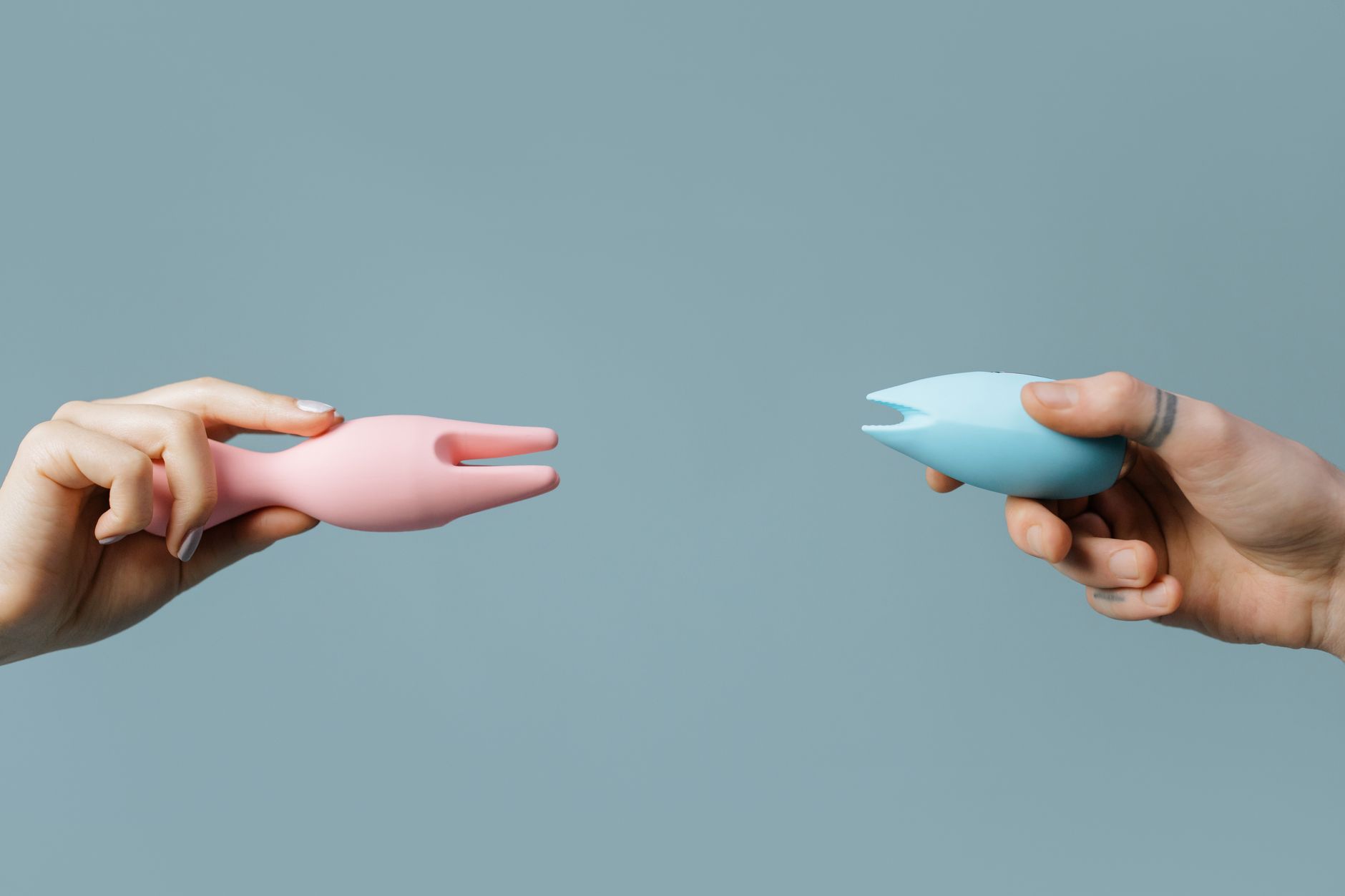
Photo by cottonbro studio on Pexels
FAQ: Reconnecting with lemon vibrators after distance
How long does it actually take to feel close again after years of disconnection?
There's no fixed timeline, but most couples start feeling a real shift in six to twelve weeks of consistent, small rituals. The key word is consistency. One reconnection attempt every three months won't rebuild much. Once or twice weekly does.
What if my partner isn't interested in reconnecting physically?
That's a conversation, not a rejection of the idea. Ask why. Is it fear? Anger? Low desire? Shame about their body? Each reason requires a different response. If it's fear or shame, you can work with that gradually. If it's anger, that might need to be addressed first before physical reconnection makes sense. If desire itself is the issue, that's worth exploring with a doctor or therapist.
Can I use a lemon clitoral vibrator alone while rebuilding with a partner?
Absolutely. Solo pleasure isn't selfish. Learning what feels good to your body alone makes partnered intimacy better, not worse. You're not "cheating" on reconnection by exploring on your own. You're gathering information about your own body that you can then share.
What if the lemon suction toy feels too intense after years without sensation?
Start on the lowest setting, or use it over clothing first. Intensity isn't the point. Sensation is. You can always turn it up. You can't unturn up if you've overwhelmed your nervous system. Go slow. Your body will tell you when it's ready for more.
How do I know if the disconnection is fixable or if we should separate?
That's the biggest question, and honestly, it requires more than a blog post. But here's a starting point: if you're both willing to try, and you're both willing to be vulnerable and honest, there's almost always something to work with. If one person has already decided it's over, or if there's active abuse or betrayal that hasn't been addressed, that's different. A good therapist can help you figure out which situation you're in.
Is it normal to feel sad or emotional during reconnection?
Completely normal. You're touching the grief of the time you lost. You're remembering what closeness felt like. You might realize how much you missed it. Let yourself feel that. It doesn't mean reconnection is failing. It means you're actually present for it.
Reconnection starts with one touch
You don't need to solve everything at once. You don't need a perfect plan or flawless execution. You need one moment where you both decide that closeness matters enough to try again. Then another moment. Then another.
The lemon clitoral vibrators, the tools, the rituals. they're all just scaffolding. The real work is the choice to show up. If you're both making that choice, everything else follows.
If you're stuck on how to start that conversation or need support navigating reconnection, reach out. That's what we're here for.