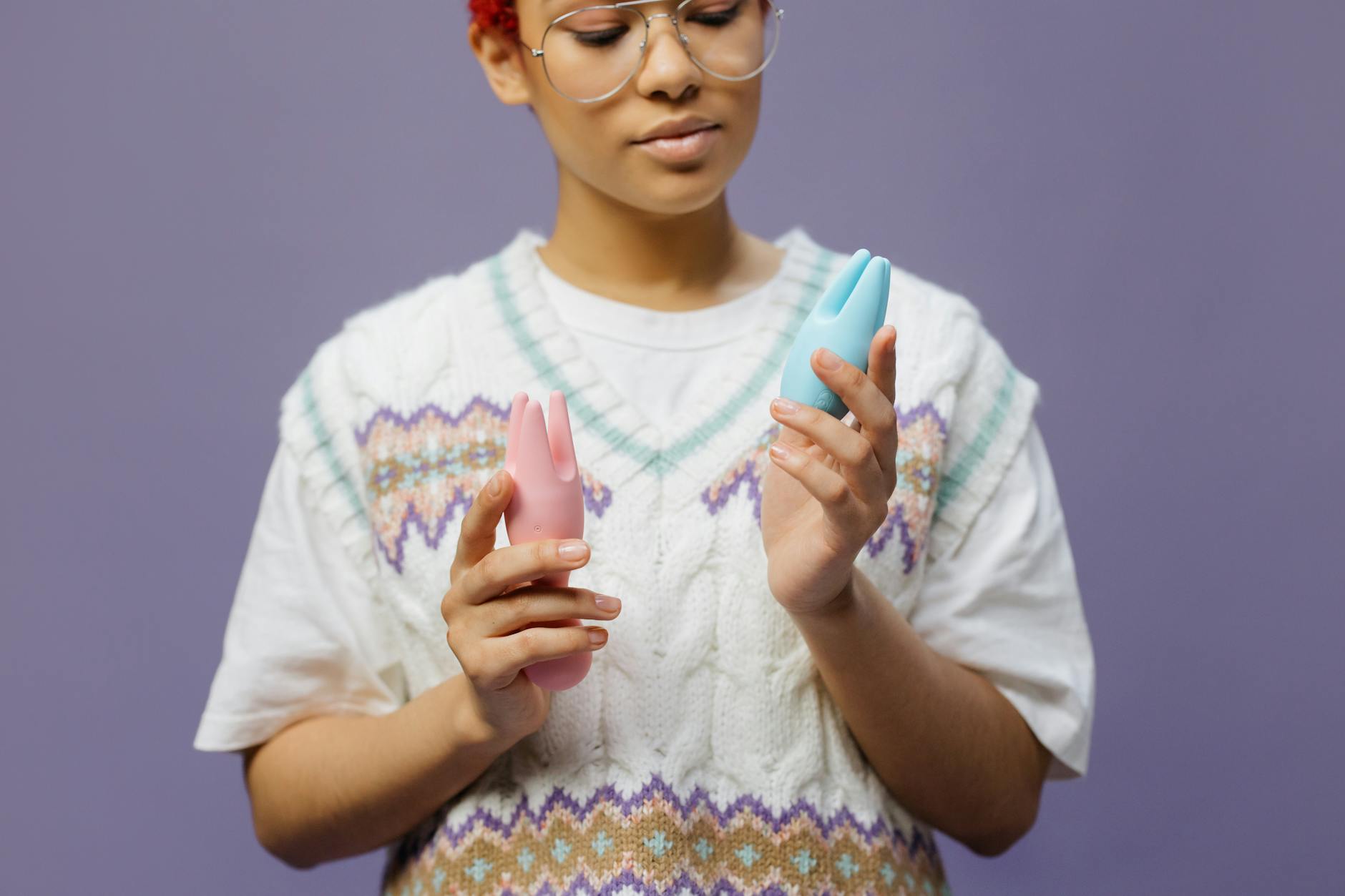
Let's talk about what a hormonal IUD actually does to pleasure
A hormonal IUD releases progestin directly into your system. It's not the same as hormonal birth control pills, but it does suppress ovulation and thin your uterine lining. What nobody mentions in the insertion appointment is that it also changes how arousal builds, how your clitoris responds to touch, and how quickly (or slowly) sensation peaks. This is completely normal. It's also completely fixable.
Here's what I see in my practice: people get an IUD, pleasure shifts, they assume something's broken, and they either white-knuckle through it or stop trying altogether. Neither is necessary.
How hormonal IUD shifts sensation
Three main changes happen in the first 3-6 months after insertion.
Arousal takes longer to build. Your body isn't cycling through estrogen peaks anymore. That means the neural cascade that used to fire quickly now fires more slowly. You might notice you need more time before sensation even registers. This is not laziness. This is biology.
Clitoral sensitivity changes. Some people experience heightened sensitivity; more often, people notice their clitoris feels less reactive to direct touch. A lemon clitoral vibrator becomes valuable here because the suction-and-release pattern stimulates nerves differently than direct vibration. It works when fingertip touch feels muted.
Pleasure plateau is flatter. Without the hormonal surge of a natural cycle, orgasm doesn't build the same steep upward curve. Instead, it often feels more like a plateau you ease into. Some people hate this. Others find it lets them stay in pleasure longer, with less pressure to "finish."
Why lemon vibrators work better with an IUD
I recommend lemon adult toys specifically to IUD users for one reason: they don't rely on direct friction to work.
A traditional vibrator creates pleasure through rapid, repetitive contact. If your clitoris feels less reactive right now, you end up pressing harder, holding it longer, and getting fatigued before you feel anything. A lemon sucker works differently. The suction-and-release action bypasses friction entirely. It stimulates nerve endings through gentle pressure cycles instead.
For people on hormonal contraception, this often means sensation registers faster and lasts longer, even when direct touch feels muted.
The adjustment window you need to know about
Your body doesn't stabilize right after IUD insertion. Most people see major shifts in weeks 2-8, smaller adjustments continuing through month 6. This is important: don't assume your new normal is permanent.
Many people tell me that month 2 or 3 feels wildly different from week 1. Some feel more pleasure return. Others find a comfortable middle ground that's different from before but equally satisfying. The mistake is expecting everything to feel the same immediately after insertion.
If you're using a lemon vibrator during this window, I'd suggest keeping notes. Not journaling therapy-style, just quick observations: what pattern feels good today, how long warm-up takes, whether sensation feels stronger or softer. This isn't obsessive. It's the same way you'd notice if a new medication changed your sleep or energy. The data helps you adapt faster.
How to adjust your technique with a hormonal IUD
Four specific tweaks that work with your body right now.
Start with pattern one, even if you used higher patterns before. Your baseline has shifted. What felt light before might feel intense now, and vice versa. Begin at the lowest setting every time for the first month. Your nervous system will tell you if it needs more.
Extend your warm-up significantly. Alone, I'd suggest 20-30 minutes of foreplay before touching your clitoris at all. With a partner, talk about extending the time you spend on other parts of your body first. This isn't frustrating delay. It's giving your nervous system space to wake up.
Use the lemon vibrator on the hood, not directly on the glans. The clitoral hood has less direct nerve density. It's gentler. Right now, especially in the first month post-insertion, start there and move to direct contact only if it feels good. You might find you prefer sensation through the hood permanently.
Experiment with pressure and position. A lemon clitoral vibrator gives you control over how much suction is happening. Angle it slightly differently. Hold it with less force. Try it while lying on your side instead of on your back. Small adjustments sometimes unlock sensation faster than changing the pattern itself.
What to expect in the first month
Week one post-insertion is a no-go zone. Your body is bruised, crampy, and not interested. Wait at least 7-10 days.
Weeks two and three, many people feel ready to explore again. Go slow. Your pelvic floor is tight from the insertion, and sensation might feel muted or almost numb. This is inflammation, not permanent. A lemon vibrator with gentle suction often feels less intense and therefore safer than other options. Start with 5-minute sessions. Let your body tell you what it needs.
By week four, sensation usually starts normalizing. This is when you can start tweaking patterns and duration. By week six, most people have a sense of their new normal and can play with it confidently.
The emotional part that matters as much as the physical
Getting an IUD is a big decision. It's also often wrapped up in ambivalence: relief about not managing pills, grief about side effects, anxiety about whether pleasure is wrecked forever. All of this lives in your nervous system. It affects arousal as much as hormone levels do.
If you're grieving the way pleasure used to feel, that's real. If you're anxious that you've made a mistake with contraception, that leaks into sensation too. This isn't a flaw in your thinking. It's how bodies work. Nervous system state shapes physical sensation.
Give yourself permission to feel both things: gratitude for reliable contraception, and frustration that pleasure shifted. You can hold both. And pleasure returning often comes faster once you stop insisting it should be identical to before.
When to contact your doctor
Pain during or after insertion is normal for a few weeks. Pain that feels sharp, shooting, or localized during pleasure is not. If you're experiencing that, book an appointment. Sometimes the IUD is fine but pelvic floor tension is sky-high. A pelvic floor physical therapist can help. Sometimes the IUD needs adjustment. Either way, get it checked.
If sensation hasn't shifted at all by week eight, and you're feeling emotionally disconnected from pleasure, that's worth mentioning too. It could be the IUD. It could be depression or anxiety. Both are treatable.
The long view
Most people I've worked with settle into a new pleasure baseline within 2-3 months post-IUD. It's different from before. It's rarely worse. It's often more sustainable because it's not dependent on your cycle anymore. A lemon vibrator bridges the adjustment period and often becomes a tool that works better long-term anyway.
Your body hasn't betrayed you. It's adapting. Give it the information, time, and right tools to do that well.