How to Use a Lemon Vibrator When Dealing With Hormonal Fluctuations and Irregular Cycles
Let's be real: your body doesn't want the same things every day. Hormonal shifts reshape arousal, sensitivity, lubrication, and what kind of touch actually feels good. For people with fluctuating hormones, this isn't a bug. It's a pattern you can learn to work with.
The mistake most people make is treating their pleasure like it should be consistent, then feeling broken when it's not. That's backward. Hormonal cycles are normal. Irregular cycles are normal. And adjusting your approach month to month, week to week, or day to day is not settling. It's paying attention.
Why your arousal pattern shifts with hormones
Estrogen and progesterone don't just affect fertility. They reshape how your nervous system responds to touch, how quickly blood flows to your genitals, and how intense sensation needs to be to register as pleasurable.
In the follicular phase (when estrogen is rising), many people report faster arousal, stronger orgasms, and a preference for direct, consistent stimulation. The tissue is plumper, lubrication comes more easily, and the clitoral complex is more engorged.
In the luteal phase (after ovulation), progesterone rises. This often flattens desire, slows arousal, and makes direct touch feel too intense. The same vibration that felt perfect last week might feel sharp or uncomfortable now. That's not sensitivity. That's your body chemistry talking.
For people with irregular cycles, PCOS, or conditions that disrupt predictable hormone rhythms, this gets messier. You might have two follicular phases and skip a luteal one. You might cycle twice in five weeks. Your body becomes harder to forecast, which means flexibility becomes your survival skill.
Tracking your patterns without obsession
You don't need a clinical chart. Just a note in your phone.
For three weeks, jot down one line each day: arousal level (low / medium / high), how touch feels (gentle / normal / intense), and what actually worked. Yes, this sounds tedious. Do it anyway. Patterns emerge in real time.
After a few weeks, you'll start noticing: "Oh, I always want more intensity right after my period." Or: "Week three of my cycle, my clitoris feels tender. Broad pressure works. Direct stimulation doesn't." Or: "My cycle is all over the place, but I know that after I travel, my desire usually tanks for four days."
This isn't neurotic. It's the opposite. You're moving from "Why isn't this working?" to "This is how my body works. Now I can plan around it."
How a lemon clitoral vibrator adapts to your cycle
Air-suction toys like the Lem are particularly forgiving across hormonal shifts because they work differently than traditional vibrators.
Instead of direct buzzing against tissue, suction stimulates the entire clitoral structure. During high-hormone phases when you want broad, encompassing sensation, the Lem's wider patterns feel incredible. During phases when your clitoris is tender and direct touch hurts, you can use lower intensities or hold the toy at a slight angle for diffused pressure instead of concentration.
This flexibility is why many people find lemon vibrators easier to use through irregular cycles. You're not buying a new toy for each phase of your body. You're learning to adjust one tool.
Adjusting technique across your cycle
When arousal is high and tissue is engorged (typically follicular phase or early cycle): Use higher intensity patterns. Longer warm-up time isn't necessary. Direct contact with the Lem's opening feels good. Orgasm often comes faster and more intensely.
When arousal is lower and tissue is more delicate (typically luteal phase): Start at pattern one. Hold the toy at the side of your clitoris instead of directly over it. Use more lubrication even if you don't think you need it. This cushions sensation. Warm-up time stretches to 20-30 minutes. This isn't failure. This is honoring what your body can do right now.
When cycles are completely unpredictable: Check in with your body each time. Thirty seconds of exploration before committing to intensity saves frustration. Your clitoris knows what it wants. Listen first, assume second.
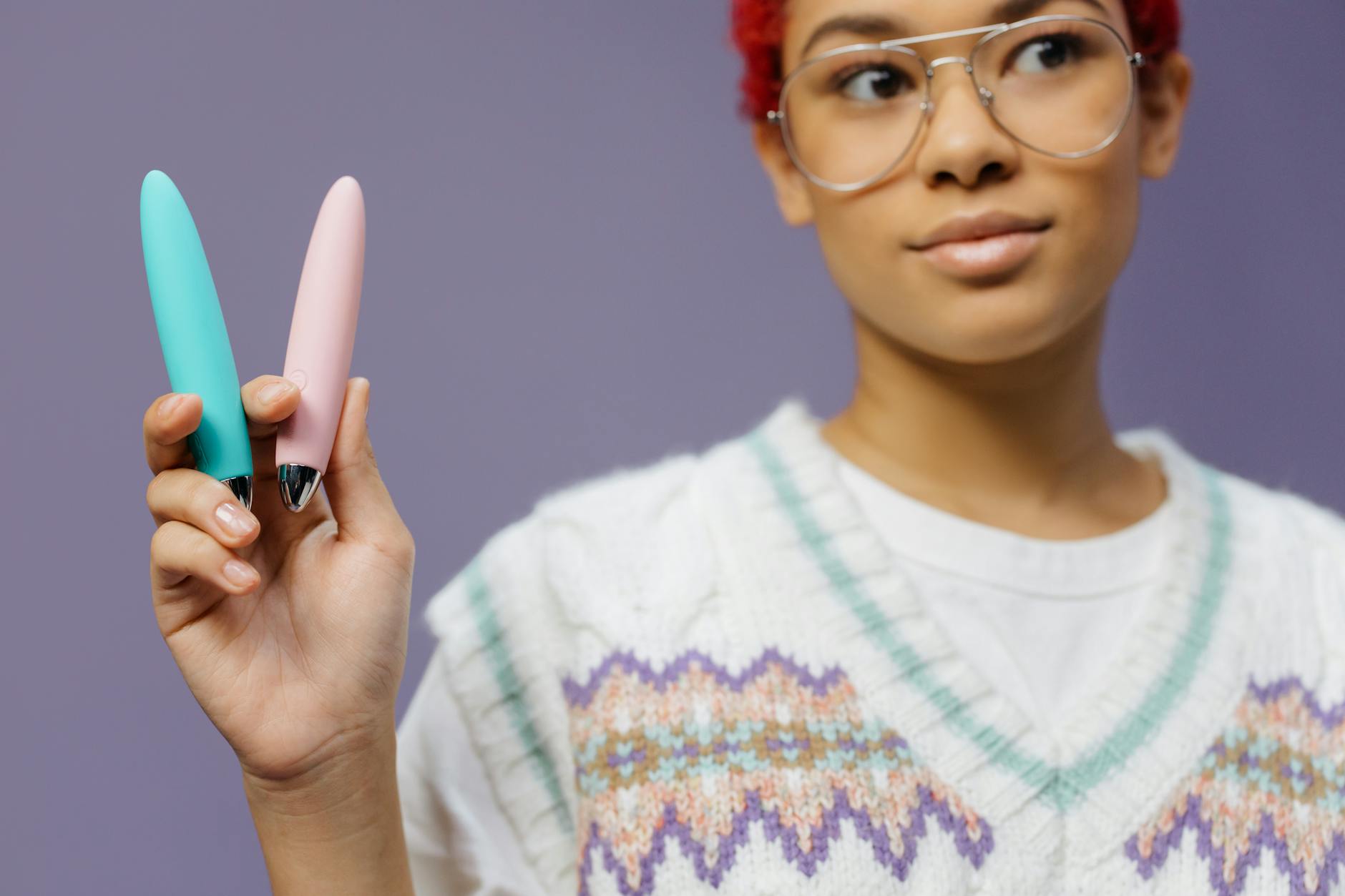
Photo by cottonbro studio on Pexels
The emotional load of hormonal shifts
Here's what nobody tells you: the frustration of inconsistent arousal is often bigger than the physical change itself.
You feel broken because you wanted sex last week and don't now. You feel disconnected from your partner because your desire is unreliable. You feel angry at your body for not doing what you ask.
Stop. Hormonal fluctuation is not your body failing. It's your body communicating. The shift from "my body should always want sex" to "my body has different needs across my cycle" is genuinely life-changing. It's also realistic.
If you're partnered, the conversation shifts too. Instead of "I'm not in the mood," try "My arousal is slower right now. Let's extend warm-up time" or "My clitoris is tender today. Can we try broad pressure instead of direct?" This moves the conversation from rejection to collaboration.
When irregular cycles signal something else
If your cycle has suddenly become chaotic when it was regular before, that's worth checking. Stress, dietary changes, new medication, thyroid shifts, or underlying conditions like PCOS can scramble your rhythm. A gynecologist can help you distinguish between normal variation and something that needs attention.
Same thing if arousal has flatlined across all phases. That's different from "arousal is lower in the luteal phase." That's worth exploring with a healthcare provider.
But irregular cycles alone? That's not a problem. That just means your planning gets more flexible. Which actually, weirdly, can be freeing.
Using cycle awareness as a reconnection tool
If you're partnered and feel out of sync, cycle tracking becomes a bridge.
When you know your follicular phase often brings desire, you can plan a night for that week. When you know luteal phase requires gentler touch, you can set expectations ahead of time. You're not fighting your body. You're working with it.
The Lem's adaptability across intensity levels and pressure angles makes this easier. You're not choosing between "having pleasure" and "honoring my cycle." You're doing both.
The practical logistics
One simple rule: lubrication is always your friend when hormones are in flux, even if your body is producing plenty naturally. External lube gives you agency over sensation in a way that internal lubrication alone doesn't. Water-based lube works best with the Lem and silicone toys. Reapply as needed.
Battery life matters when you're tracking what actually works. A low battery can limit your ability to use the intensity you need. Keep yours charged.
If you're on hormonal birth control and your cycles have become completely regular, you can apply this same framework. The timing might be different, but the principle stays: your arousal isn't flat across the month. Track it. Adjust for it.
FAQ: Hormonal fluctuations and pleasure
Why does my arousal disappear during certain times of my cycle?
Progesterone rises after ovulation, and for many people, this suppresses dopamine, the neurochemical tied to desire. It's not psychological. Your nervous system is genuinely less responsive to sexual cues during the luteal phase. This is common and completely normal. It doesn't mean you're broken or losing interest in your partner.
Can I use a lemon vibrator when I'm not aroused at all?
Yes, but adjust your expectations. When arousal is low, the Lem can help build it, but it requires longer foreplay, more lubrication, and lower initial intensity. Think of it as a tool to encourage arousal, not to jump-start an already-firing system. Sometimes five minutes of broad, gentle suction brings desire in. Sometimes it doesn't, and that's the cycle talking, not the toy failing.
Does using a vibrator during low-arousal phases eventually harm my sensitivity?
No. Using a vibrator during phases when you need more intensity doesn't desensitize you. Arousal sensitivity fluctuates with hormones regardless of toy use. If anything, finding a tool that works across your whole cycle helps you stay connected to pleasure, which supports sensitivity long-term.
Should I be tracking my cycle if it's completely irregular?
Yes, because "completely irregular" actually has a pattern if you watch for three to four months. You might notice you have longer follicular phases and shorter luteal phases, or that stress disrupts your cycle predictably. Tracking reveals the hidden structure of your irregularity. That structure is useful information.
My partner doesn't understand why my arousal changes so much. How do I explain it?
Show them the science. "Hormones reshape how my nervous system responds to touch. Week one, I need direct stimulation. Week three, the same touch feels too sharp. That's not about you. That's about my biochemistry." Make it concrete. Then brainstorm: "In my high-arousal phases, can we plan more frequent sex? In my low phases, can we extend foreplay?" Solve for the cycle, not against it.
Can irregular cycles be managed so arousal becomes more consistent?
Sometimes. A gynecologist can assess whether your irregularity signals something treatable (like thyroid dysfunction or PCOS). But consistency for its own sake isn't the goal. Learning to meet your body where it actually is feels better than fighting for some imaginary flat-line baseline.
The bigger picture
Here's what I've learned from years of coaching couples through this: people who can honor their body's fluctuations build stronger intimacy than people chasing some mythical constant desire.
Your cycle is not a problem to solve. It's information to use. A lemon clitoral vibrator works so well through hormonal shifts because it's genuinely flexible. It meets you at high intensity some weeks and gentle suction other weeks. It's collaborative with your body instead of demanding your body conform to one setting.
That's the attitude worth bringing everywhere else too. Track your patterns. Adjust your approach. Trust that your arousal has rhythms, and those rhythms are completely normal. Then use a tool that works for all of them.
If you want personalized guidance on navigating pleasure through hormonal changes or building stronger intimacy around your cycle, reach out. I'm here to help.