
Let's start with the real problem
One of you comes in three minutes. The other needs fifteen. You've probably tried the usual fixes: slowing down, speeding up, taking turns. None of it feels good because you're managing each other instead of being together. This is actually one of the most common relationship friction points nobody talks about, and it's not a personal failure. It's a mismatch in wiring, and it's fixable.
A lemon clitoral vibrator changes the math entirely. Not by making anyone compromise, but by letting both partners finish from the stimulation they actually need, at the same time, without resentment creeping in.
Why orgasm styles clash in the first place
Your nervous system responds to stimulation in patterns shaped by years of solo experience, hormonal cycling, medication, stress, and pure neurology. Someone who's spent years with quick, intense alone time has trained their body to peak fast. Someone whose solo sessions involve extended buildup and multiple waves has built a different rhythm. Neither is wrong. They're just incompatible without a bridge.
When partners have mismatched orgasm timelines, three things usually happen. The faster person waits, gets bored, loses arousal. The slower person feels rushed, can't relax into their body, and either fakes it or doesn't come at all. Both people end up resenting the experience instead of enjoying it. A lemon clitoral vibrator solves this by giving each person independent control over their own stimulation.
How a lemon vibrator creates sync without negotiation
Unlike penetrative sex, where rhythm has to be shared, a lemon vibrator (or any external clitoral vibrator) lets the person wearing it set their own pace completely independently. Here's what that means in practice.
Imagine you're having partnered sex and one of you uses a lemon vibrator on your clitoris. The penetrative partner sets their pace. You set your vibration level. No compromise required. The penetrating partner doesn't have to slow down or speed up. You don't have to wait for them or rush yourself. You're both getting exactly what you need simultaneously. That's the entire win in one paragraph.
This works because it separates clitoral stimulation from penetration timing. For people with vulvas who need clitoral input to orgasm (which is most of us), this independence is everything.
The setup that actually works
Start with the conversation before clothes come off. Tell your partner plainly: "My body needs X (time / intensity / rhythm). Your body needs Y. That's not a problem. Here's how we fix it." A lemon clitoral vibrator isn't a tool that one person "uses" on the other. It's a tool one partner controls for themselves while the other person does what their body needs to do.
In practice, this might look like: one partner enters. The other partner holds or wears the lemon vibrator and controls the intensity and pattern. That person is managing their own arousal completely independently. The penetrating partner isn't thinking about clitoral stimulation timing. They're focused on their own sensation. Both people can build to orgasm at their own speed and peak together.
If you're not doing penetrative sex, it's even simpler. One person uses the lemon vibrator on themselves or their partner uses it on them while both partners are focused on building arousal together. The control stays with the person receiving, so they can dial intensity up or down as needed.
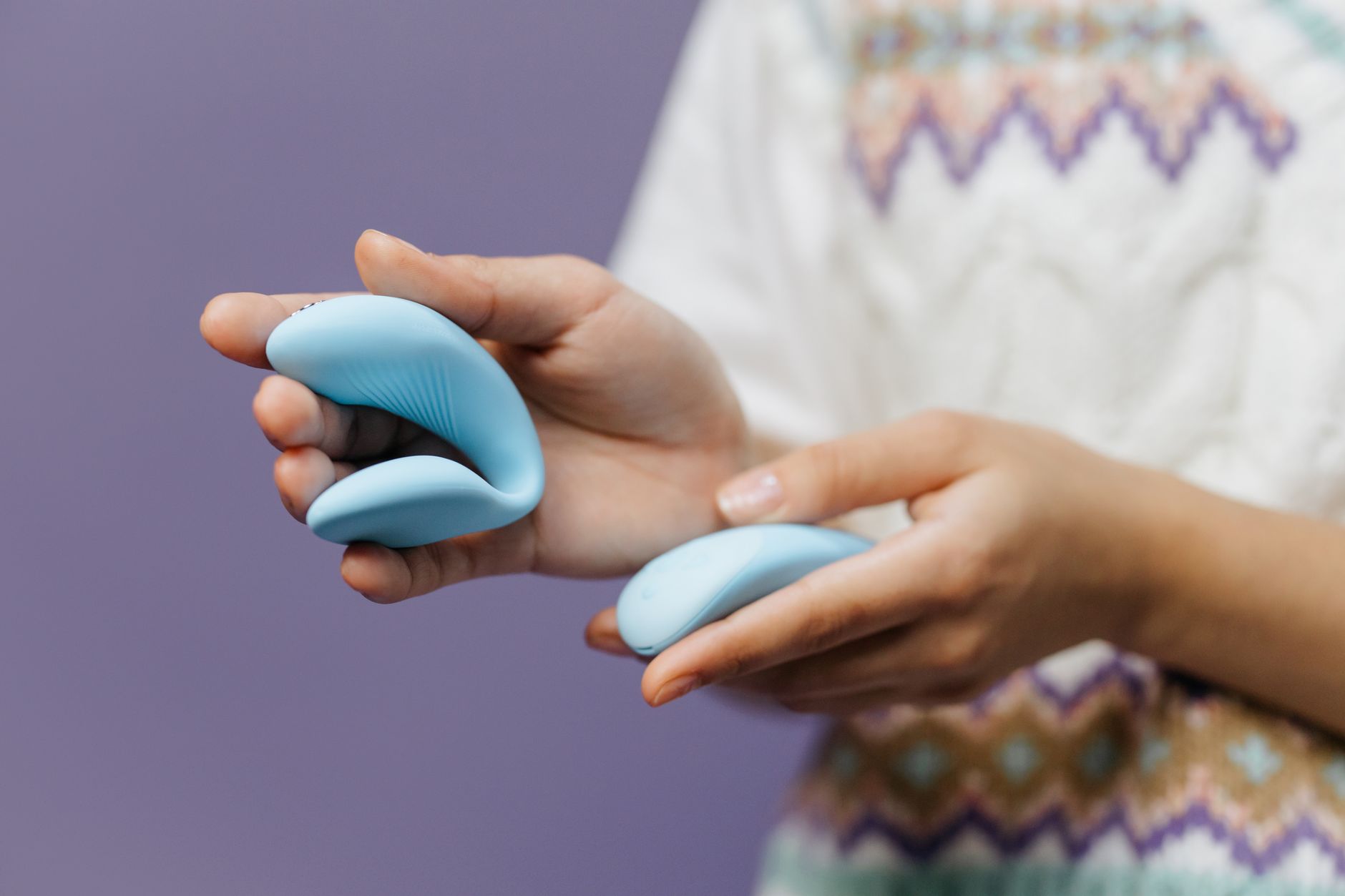
Photo by cottonbro studio on Pexels
The rhythm patterns that bridge the gap
Most people with mismatched orgasm timelines fall into one of three categories.
Fast responders usually come from concentrated, repetitive stimulation. They need pattern and consistency. A lemon vibrator's steady pulse is ideal because they can find a pattern, stick with it, and let their body respond without distraction. Set it to pattern one or two and hold it still. Don't vary. Consistency is the gift here.
Slow builders need time and typically benefit from varied stimulation. They might need to move the vibrator in small circles, combine it with other sensations, or use patterns that shift between intensity levels. A lemon vibrator's multiple patterns let them explore what works without asking their partner to change anything.
Wave responders peak, plateau, then build to another peak. They often need breaks between waves and then renewed intensity. A lemon vibrator lets them pause between orgasms or shift patterns, giving their nervous system the reset it needs without interrupting partner connection.
The key is this. Your partner doesn't have to know or manage your rhythm. You do. A lemon vibrator puts that control in your hands literally.
The mental shift that changes everything
Here's what changes when you use a lemon clitoral vibrator as a couples tool instead of a solo tool.
Instead of "I need you to slow down" or "I need you to hurry up," the conversation becomes "I'm going to use the vibrator so I can meet you at the finish line." That's not a negotiation. That's partnership. One person isn't managing or waiting for the other. Both people are optimizing for their own pleasure and showing up together.
This removes shame entirely. The fast responder isn't "too fast." The slow builder isn't "taking too long." Both people are just being their neurological selves, supported by a tool that lets them sync without forcing either person into an unnatural rhythm. After months or years of trying to modify your body to fit your partner's timeline, that permission feels revolutionary.
If you've ever felt like you were performing instead of experiencing, or waiting instead of enjoying, a lemon vibrator is specifically designed to end that dynamic.
The technical stuff that matters
A lemon clitoral vibrator has one main job: deliver consistent, focused stimulation where you need it most. That design matters for couples because it's subtle during partnered sex. You're not fumbling with something bulky. It's ergonomic enough that one partner can hold it or the receiving partner can control it while their hands or body are otherwise engaged.
The range of patterns is useful here too. If one partner's "natural" stimulation pattern matches one of the vibrator's preset patterns, they can set it and basically forget about it. No constant adjustment. Just steady input while they focus on the other sensations and their partner.
Battery life matters more than you'd think. Dying mid-session is killing the mood instantly. A lemon vibrator designed for reliable performance means you can actually relax into the experience instead of monitoring a low-battery warning.
When to use it and when not to
A lemon clitoral vibrator shines in partnered sex when you need clitoral input to orgasm. That's penetrative sex, oral sex where you want added stimulation, or any scenario where you want independent control over your own climax.
It's less useful if one partner doesn't want toys in the bed at all, or if the rhythm mismatch is actually a desire mismatch disguised as a timing problem. If one person is only half-interested in sex, no vibrator fixes that. That's a different conversation entirely, and it's worth having separately.
The other thing. A lemon vibrator doesn't fix emotional disconnection. If resentment has built up over years of mismatched timing, the vibrator is a tool that helps you experience pleasure together again. The emotional repair work still needs to happen. But this tool removes the mechanical friction so you can focus on reconnecting.
The conversation to have before you buy
Tell your partner directly. "I want to try using a vibrator during sex so we can both finish the way our bodies actually need to. Not as a replacement for you. As a way for me to participate fully without either of us having to hold back." That's it. No apology. No explanation of why your body doesn't work "right." Just a practical plan.
If your partner feels threatened, that's the real conversation. It's not about the vibrator. It's about insecurity or shame or a belief that pleasure should look a certain way. Those feelings are valid and worth exploring. But they're separate from the mechanical problem the vibrator solves.
Some partners find that actually expanding pleasure together with a tool like a lemon vibrator rebuilds intimacy that was fractured by years of sexual friction. It's not the vibrator doing emotional work. It's the relief of not having to manage each other's bodies anymore. That relief opens space for actual connection.
When you're both ready to try it
Start slow. One partner introduces it gently during foreplay when you're both already aroused. No pressure to perform. No expectation of immediate orgasm. Just exploration of how the stimulation feels and how it changes the overall experience.
Talk afterward. What felt good? What felt weird? Do you want more intensity or less? Do you want to use it every time or just sometimes? These aren't tests. They're data points that help you refine what actually works for your bodies together.
A lemon clitoral vibrator is a tool. Like any tool, it works best when both people know what it's for and how to use it. In this case, it's for removing the friction that comes from different orgasm styles so both partners can finish satisfied, together, without compromise.
FAQ: Different orgasm styles and lemon vibrators
Can a lemon vibrator help if one partner takes much longer to orgasm?
Yes. The slower partner can control the vibrator's intensity and pattern to match their actual arousal pace. The faster partner doesn't have to slow down artificially. Both people reach orgasm on their own timeline simultaneously. No waiting. No rushing.
Will using a vibrator make my partner feel like they're not enough?
That fear is common and valid. The conversation matters here. Frame it as "I want to enjoy this more by getting exactly the stimulation I need." That's not about your partner failing. That's about you taking responsibility for your own pleasure, which is actually sexier than asking your partner to be everything.
What if we want to use the vibrator but we're embarrassed?
Embarrassment usually comes from shame about pleasure, not from the tool itself. Start by acknowledging that. Then remind yourselves: your partner already knows your body doesn't work on a standard timeline. The vibrator isn't revealing something shameful. It's just making the existing situation better. You're not broken. You're practical.
Can a lemon vibrator work if we're doing oral sex?
Absolutely. The receiving partner can hold a lemon vibrator on their clitoris while the penetrating partner uses their mouth. Couples often find this is actually easier than penetrative sex with a vibrator because the receiving partner has full hand control and can adjust pressure or angle instantly. No coordination needed.
What if one partner wants the vibrator but the other doesn't?
That's a real mismatch that needs its own conversation. It's not about the tool. It's about desire alignment, comfort with pleasure, or possibly shame around sexuality. Those feelings deserve space and exploration, ideally with a sex-positive therapist if it's creating real tension.
How do we know if a lemon vibrator will actually help or if this is something else?
One clue: you're finishing but one person is left depleted or resentful. Another clue: you've been modifying your natural rhythm for months or years. If both of those are true, a vibrator almost certainly helps. If the real issue is that one person isn't interested in sex, the vibrator won't fix that. But if the interest is there and the timing is just mismatched, this tool is genuinely transformative.
The thing nobody says out loud
Your orgasm style is not a personal failure. Your partner's orgasm style is not a personal failure. The mismatch is just anatomy and neurology meeting. For years, couples in this exact situation have been told to communicate better or try new positions or focus more on foreplay. Those things help sometimes. But the real solution is usually simpler. Let each person access the stimulation they actually need, at their own pace, simultaneously.
A lemon clitoral vibrator does exactly that. It's not romantic in the way we're taught to think about romance. But it's deeply intimate in the way that actually matters. It's about showing your partner: I want you to finish the way your body needs to finish. I'm not asking you to be different. I'm just bringing in a tool that lets both of us have what we need.
That's the whole conversation. That's the whole solution.
If you're ready to explore this, start with talking to your partner. And if you want specific guidance on how to have that conversation or navigate mismatched desire in other ways, reach out to us. We're here.
Sources
Gottman, J. M., & Silver, N. (2015). The Seven Principles for Making Marriage Work. Harmony Books.
Meston, C. M., & Frohlich, P. F. (2000). The Neurobiology of Sexual Function. Archives of General Psychiatry, 57(11), 1012-1030.
Pepping, C. A., & Duvenage, M. (2016). The Relationship Between Mindfulness and Relationship Satisfaction: A Meta-Analysis. Mindfulness, 7(5), 1264-1280.