
The honest part nobody talks about
You don't stop wanting sex because you're tired. You stop wanting it because your brain has reorganized itself around keeping small humans alive. That's not dramatic. That's neuroscience. And if you think adding another thing to your to-do list is going to fix it, you're already approaching this wrong.
Here's what actually happens: parenthood floods your nervous system with cortisol and oxytocin (the bonding hormone, not the pleasure hormone). You spend all day being touched, needed, and responsible. By evening, the idea of being touched voluntarily feels less like foreplay and more like another demand. Sex becomes a box to check instead of a thing you want. Your partner feels rejected. You feel guilty. Everyone loses.
A lemon vibrator like the Lem doesn't fix parenting. It doesn't give you more time or energy. But it does something more useful: it separates pleasure from performance, obligation, and timing.
Why suction changes the game for exhausted parents
Traditional vibrators require mental bandwidth. You have to guide them, adjust pressure, chase the feeling. That's work. Suction technology (like the Lem's gentle air-pulse design) does something different. It creates a physical sensation that's hard to ignore, which means your brain actually has to show up. You can't autopilot through it.
For people deep in the exhaustion of parenting young kids, that's the actual gift. You're not being asked to perform or stretch to reach an orgasm. The device is literally designed to find the right frequency for your body and hold it there. Your only job is to let it work.
Most of my clients in this phase report that the Lem gives them their first genuine pleasure in months. Not because the device is magic, but because it removes the cognitive load that killed desire in the first place.
Timing matters more than you think
If you wait until your partner is interested, you'll wait forever. That sounds harsh, but it's true. So here's what actually works: use the lemon vibrator alone, on your own schedule, without it being about partnered sex.
This is not a shortcut around reconnection. This is the foundation for it. When you've felt genuine pleasure in your own body recently, you have something to connect from. When it's been months, you're trying to rebuild from nothing. One is possible. The other is exhausting.
Set a boundary: 15 minutes, alone, after kids are down. Not a luxury. Not a reward you have to earn. Part of basic self-care, like showering or eating. If that feels selfish, remember that a partner who's touched out and resentful is not present. A partner who's had five minutes of solo pleasure is different. Calmer. Actually capable of connection.
How to actually use the Lem when you have zero mental energy
First, don't overthink settings. The Lem has multiple patterns, but honestly, most exhausted parents find one that works and stick with it. That's fine. Start at a lower intensity. Your body doesn't need intensity right now. It needs consistency and permission.
Second, don't wait for the perfect moment. Use it while your partner is home if that makes you feel less guilty about taking time. Use it in the afternoon before everyone loses their mind. Use it when you're not turned on yet. The Lem is designed to get you there, not to reward you for already being there.
Third, let it be boring. You don't need fantasy or elaborate setup. Sometimes the most profound part of reclaiming pleasure is using a lemon clitoral vibrator with zero narrative attached. Just sensation. Just your body. Just five minutes that are entirely yours.
The conversation with your partner that actually helps
Sex doesn't return because you both agree to try harder. It returns because the person feeling touched out stops feeling so overwhelmed. The touched-out person usually has to be the one who initiates this, which feels unfair. But fairness isn't the point. Getting your life back is.
Tell your partner something like this: "I need some time to feel pleasure on my own terms. This isn't instead of us. It's so that I have something to come back to. Right now, all touch feels like a demand. I need to change that." Most partners actually respect that more than guilt-driven attempts to want them.
Then use the time. Actually use it. Don't let it become another thing you skip because someone else needs you. Your nervous system needs to remember what it feels like to prioritize itself.
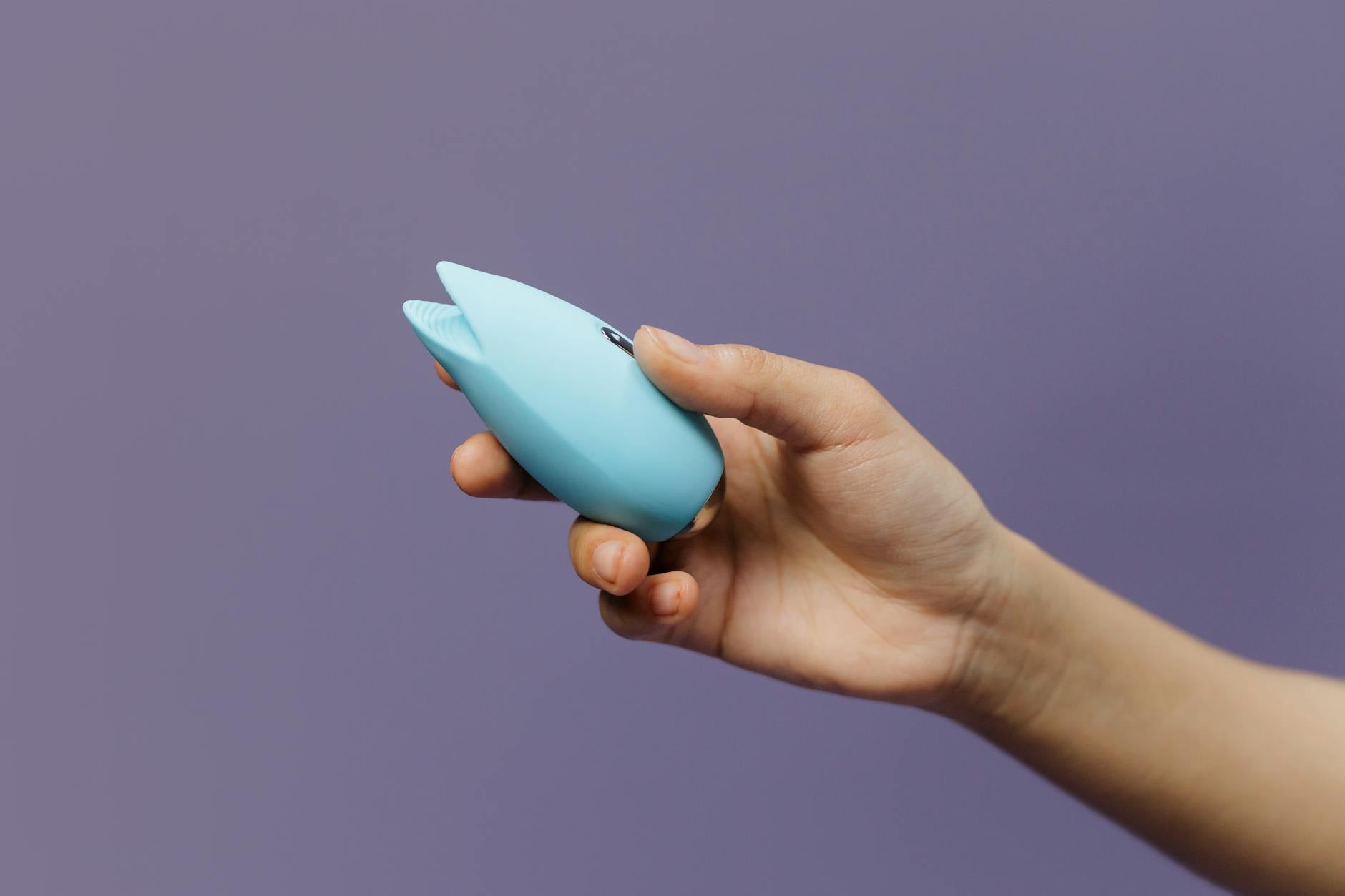
Photo by cottonbro studio on Pexels
When using a lemon vibrator with a partner actually works
Once you've had some solo time, the path back to partnered pleasure becomes clearer. Here's what helps: use the Lem together, but differently than you'd use a traditional vibrator. Don't treat it as foreplay. Treat it as the main event.
Your partner can hold it, or you can. Either way, the focus is on your sensation, not on what happens next. There's no pressure to transition to penetration or to reciprocate immediately. You get to feel good. That's the whole thing.
Most partners actually find this less threatening than it sounds. When sex has been obligation-based, partnered vibrator use can feel like the first time in years that your partner gets to focus entirely on your pleasure without expectation of return. That's actually really connecting.
Why the Lem specifically helps with parent burnout
Suction technology (also called air-pulse or lemon sucker style vibrators) doesn't require the same kind of direct pressure as traditional vibrators. For people who've been touched out all day, that matters. It feels gentler on your nervous system even though it's more intense on your clitoris. The sensation is concentrated but not overwhelming.
The design also means you can use it through underwear if that helps you ease in. You don't have to fully undress or fully commit. You can be half-present at first and let your body catch up. That's huge when you're this depleted.
Secondly, the Lem is quiet and small. You can use it in 10 minutes. There's no setup, no cleanup, no elaborate foreplay. In a life where simplicity is survival, that matters more than any theoretical reason.
What to do if pleasure still feels impossible
Sometimes using a lemon clitoral vibrator brings back sensation. Sometimes it doesn't. If you're using it regularly and still feeling numb, that might signal something beyond parenting exhaustion. Postpartum hormonal shifts, untreated depression, or relational resentment can all flatten desire. Those don't disappear because you bought a better device.
If that's your situation, the vibrator isn't the solution. Connection with a therapist or your GP is. But most of the time, the issue isn't that you're broken. It's that you're overwhelmed and touch has become triggering. Time, boundary-setting, and a device that lets pleasure happen without effort can genuinely shift that.
Rebuilding desire is not about trying harder
Every parent I work with thinks they need to make more effort. They need to be more available, more interested, more enthusiastic. They're already running on empty. Adding pressure is the opposite of what helps.
Using a lemon vibrator in this phase isn't about fixing anything. It's about proving to your nervous system that pleasure is still possible when you remove obligation. That's the actual reset. Once your brain believes that, everything else becomes easier.
Start small. Start alone. Start without expectation. The Lem and other lemon sexual toys exist partly because partnered sex in the parenting years often requires a different kind of support. Using one isn't a workaround. It's a tool that matches your actual life instead of asking your life to match an idealized version of desire.
Frequently asked questions
How often should I use a lemon vibrator if I'm in the postpartum phase?
Start with once or twice a week, 10-15 minutes. Not because that's scientifically optimal, but because it's sustainable. You're already exhausted. A routine that feels like another obligation won't stick. The goal is to prove pleasure is possible, not to rack up a specific number of sessions.
Can using a lemon vibrator make partnered sex better if we're both touched out?
Yes, but only if it genuinely restores some pleasure for the person who's most depleted. If both partners are equally overwhelmed, you might both need solo time before you're ready to connect. The vibrator helps the individual recharge, not the relationship. The relationship usually repairs once one person feels less resentful.
Will my partner feel threatened if I use a lemon clitoral vibrator alone?
Most partners feel relieved. Honestly. When sex has been obligation-based, many partners are carrying guilt about wanting something their partner doesn't. Knowing you're working to rebuild your own pleasure often makes them feel less guilty, not more. The conversation matters though. Frame it as "I need this for me" not "I need this instead of you."
What's the difference between a lemon vibrator and a traditional vibrator for people in this situation?
Suction (lemon-style) vibrators feel less demanding. They don't require you to guide them or chase the feeling. That matters when your nervous system is already activated by constant parenting touch. It's one less thing you have to do.
How do I know if my numbness is parenting exhaustion or something medical?
If you've had zero sensation return after 2-3 months of regular solo pleasure time, and you're no longer in the immediate postpartum window, check with your GP. Hormonal shifts, medication side effects, or postpartum depression can all flatten sensation. A vibrator won't fix those. But if numbness is specifically tied to being touched out, rest and boundary-setting usually help within weeks.
Should I tell my partner I'm using a lemon vibrator, or keep it private?
That depends on your relationship and whether secrecy adds stress. If telling him makes you feel guilty or creates conflict, privacy might actually be the healthier choice right now. If you think he'd be supportive, honesty builds connection. Trust your gut on which serves you better.
Is using a vibrator a sign that something's wrong in the relationship?
No. It's a sign that you're human and your nervous system needs support. Desire doesn't return because you white-knuckle through it or because your partner tries harder. It returns when you feel safe in your own body again. A lemon vibrator is one tool for that. So is therapy, boundary-setting, and sometimes just time.