The disconnect nobody talks about
You're in bed, and your partner is there, or you're alone, and the conditions are right. But something inside you has logged off. You can feel the physical sensation fine. What's missing is the feeling of being inside your own body. It's like watching yourself from a few inches above.
This is dissociation during sex, and it's not rare. In clinical practice, I see it constantly. People describe it exactly like you might: "I'm not really here," "I'm thinking about my to-do list," "I feel numb even though I know I should be enjoying this." The frustration is that knowing it's happening doesn't stop it.
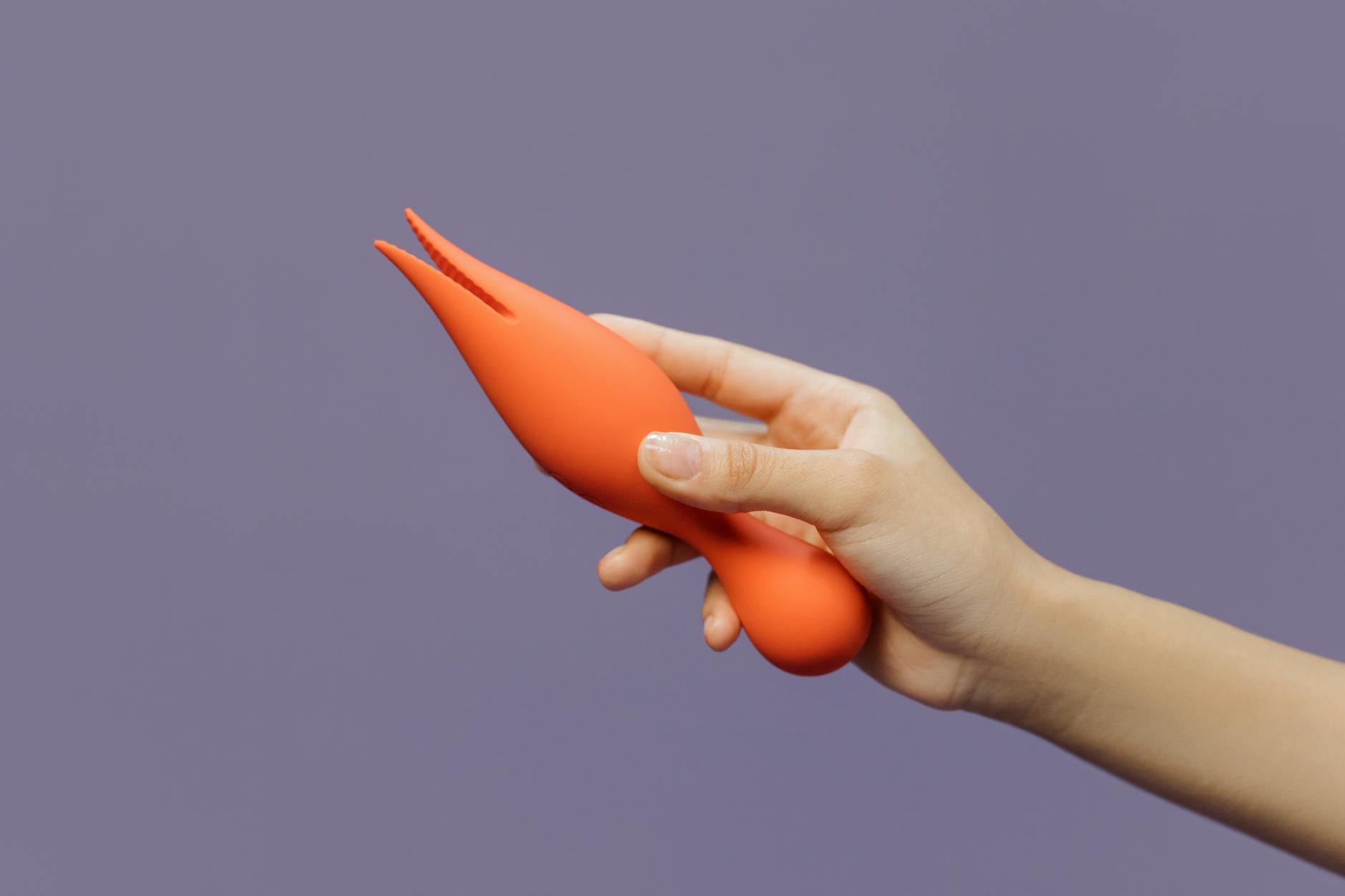
There are reasons this happens. Trauma history, chronic stress, relationship rupture, or sometimes just years of autopilot intimacy. The nervous system learns that disconnection is safer, so it checks out. The good news? The nervous system can learn differently. And a lemon vibrator from Hello Nanc, with its unique suction sensation, is a genuinely powerful tool for teaching your body it's safe to stay present.
Why dissociation blocks pleasure
Pleasure doesn't exist in your clitoris or your genitals. It exists in your brain's interpretation of sensation. If your nervous system is in a protective crouch, signaling danger even when you're in a safe bed, your brain won't process sensation as pleasure. It might register as pressure, or numbness, or a kind of muted awareness that you're supposed to be having fun but aren't quite getting there.
This isn't a willpower problem. You can't think your way out of dissociation. Telling yourself to "be present" is like telling someone with social anxiety to "just relax." It doesn't land.
What works instead is anchoring sensation to novelty. Your nervous system wakes up when something is unexpected. Traditional vibrators? Your body has learned their pattern. The straight buzz, the familiar pressure. After a while, it becomes background noise, like traffic outside your window. Suction technology is different. The sensation is intermittent, rhythmic, but not identical to what you've felt before. Your nervous system pays attention.
How suction wakes up the body differently
A lemon clitoral vibrator works by drawing tissue into a gentle vacuum, creating a sensation that's closer to oral sex than to traditional vibration. This matters for presence because the feeling is harder to ignore or autopilot through. You have to feel the difference between the suction at level 1, level 3, level 5. Each setting is a distinct experience. You're not numb to it after thirty seconds.
This matters neurologically too. The clitoris has thousands of nerve endings, but many dissociated folks report feeling "numb" there even when sensation is technically intact. What they mean is the sensation isn't registering as erotic or pleasurable. Suction hits different nerve pathways than vibration does. It's almost like you're learning to feel pleasure in this particular location for the first time. And learning is the opposite of autopilot.
Many clients tell me that the first time they use a Hello Nanc lem vibrator, they're shocked at how present they have to be. "I can't zone out," one person told me. "It's too interesting." That's the point. Your body needs to be the main character of the experience, not a supporting player.
Starting with safety and slowness
Here's where most people go wrong: they assume that more sensation, more intensity, more stimulation will wake them up. Usually, it does the opposite. If you're already in a protective state, blasting yourself with a high setting just teaches your nervous system that pleasure is overwhelming. You'll retreat further.
Start at pattern 1 or 2 on the Lem. I'm serious about this. The goal isn't to get off. The goal is to notice. Spend five minutes at the lowest setting and actually feel what's happening. Is there warmth? Pressure? A tingling quality? Are you holding your breath? If you are, pause and breathe. Your nervous system reads breath-holding as a threat signal.
Most people have never spent five uninterrupted minutes noticing their own body without trying to make something happen. This is weird. It might even feel boring at first. That's fine. Boring is safe. Boring is where presence lives.
The role of consent and permission
Dissociation during sex often coexists with a second layer: permission. Many people learned, somewhere in their history, that their pleasure wasn't quite safe to pursue. Maybe it was explicit (early shame around sexuality), or implicit (nobody around you seemed to enjoy sex much), or relational (you learned to calibrate your needs around someone else's comfort). The result is the same: your body doesn't fully believe it's allowed to want this.
Using a lemon vibrator solo first is crucial. There's no one else to monitor, no one else's pleasure to make room for, no negotiation of who gets to feel what. You're inside a fully consensual moment with yourself. That might sound simple, but for many people, it's genuinely new.
If you're in a partnership, the conversation is important: "I'm using this to work on being more present with my own body. I'm not doing this because something's wrong with you or what we have. I'm doing this for me." The first few times, solo is better. Let your nervous system trust the sensation before you add another person's presence into the dynamic.
Building the practice week to week
Week 1: Five to ten minutes at setting 1 or 2, solo, no expectation of orgasm. You're noticing only. What textures, temperatures, pressures do you feel?
Week 2: Same setup, but now you're allowed to change the setting if you want to. You're giving your brain multiple distinct experiences to pay attention to. If you orgasm, that's fine. If you don't, that's also fine. The goal is presence, not a particular outcome.
Week 3: Add a secondary sensation. Maybe a hand on your thigh. Maybe soft music. Maybe returning to a fantasy that actually turns you on. The point is: once presence is present, you can start layering in pleasure.
Week 4 and beyond: If your partner is involved, invite them into the experience. They don't have to do anything. They can just be present while you explore your own body with the lemon vibrator. Some couples find this incredibly connective because it's the opposite of performance sex. It's about witnessing, not achieving.
When dissociation meets physical factors
Sometimes disconnection isn't purely nervous-system-based. Sometimes there's a physical layer. Medications that dull sensation, hormonal shifts that change tissue responsiveness, recovering from gynecological surgery where touch felt traumatic. A lem vibrator works alongside these situations because it doesn't require the same kind of direct friction or pressure that traditional toys do. Suction is gentler, which means your body can learn to trust sensation again without needing immediate intensity.
If you're also dealing with direct clitoral sensitivity concerns, learning how to use your lemon vibrator when direct touch feels too intense is a parallel path worth exploring.
The relationship between presence and real intimacy
Here's what I tell every couple: you can't connect to your partner if you're not connected to yourself. Dissociation masks itself as relationship issues. "We're not intimate," someone will say, and what they mean is they feel invisible. But often what's actually happening is they feel invisible to themselves first.
When you practice presence with yourself and a lemon clitoral vibrator, you're not just chasing pleasure. You're rehearsing embodiment. You're teaching your nervous system that it's safe to feel, to want, to be here. That translates directly into partnership. A person who knows how to be present with their own body brings that presence into the room with another person.
The irony is that many couples think the fix is more novelty, more positions, more scheduling. Sometimes the fix is less. Less performance, less goal-orientation, more presence. And presence starts alone.
Troubleshooting when presence still feels elusive
If you're practicing for three weeks and still feeling checked out, that's useful information. It might mean the dissociation is connected to something deeper. Unresolved trauma, chronic anxiety, relationship fracture that no solo practice can fix. None of that is a personal failing. It's a signal to add another tool to your toolbox: a therapist who specializes in somatic work or trauma-informed sex therapy.
Presence isn't something you force. It's something you practice. Some people feel it within days. Others take weeks. There's no timeline. The point is showing up consistently, without judgment, and giving your body permission to feel what it feels.
FAQ: Presence and Pleasure
Can dissociation during sex go away completely?
Yes, but not overnight. Dissociation is your nervous system's learned response to perceived threat. You can retrain it, but that requires repetition and safety. A lemon vibrator accelerates that process because the novel sensation demands attention. Most people report that after consistent practice, dissociation becomes less automatic and shorter-lived. Some people say it disappears entirely.
Do I need a partner for this to work?
No. In fact, solo practice is often more effective because there's no performance pressure. You're not managing anyone else's needs, expectations, or arousal. Your job is just to notice your own body. Once you've built that skill, you can bring it into partnered sex, but solo is where the foundation gets laid.
What if I feel guilty taking time for solo pleasure?
That's a hangover from old messaging about what your body is "for." Your pleasure isn't selfish. Your presence isn't selfish. In fact, a partner generally prefers a person who's embodied and present to a person who's physically there but mentally absent. You're not taking from your relationship by attending to your own nervous system. You're improving it.
How is a lemon suction vibrator different from what I've tried before?
Suction engages different nerve pathways than traditional vibration. The sensation is intermittent and rhythmic rather than constant. For people with dissociation, that novelty is disruptive to the autopilot response. Your brain has to stay engaged. If you've always used bullet vibrators or rabbits, the Hello Nanc lem vibrator will feel distinctly different, and that difference is exactly what can jolt you back into presence.
Can I use a lemon vibrator if I'm on medications that affect sensation?
Often, yes, because suction works through a different mechanism than medications typically blunt. That said, talk to your provider if numbness is related to a specific medication. But many people find that while a traditional vibrator feels like nothing, a lemon clitoral vibrator still registers clearly. The added input is strong enough to break through.
What if my partner feels threatened by me using a lemon vibrator alone?
That's a conversation, not a problem. A partner's discomfort usually stems from their own insecurity or from cultural messaging that says partnered sex is the only "real" sex. You can reassure them: "This is about me rebuilding a relationship with my own body. It makes me more present with you, not less." If they remain unsupportive after that conversation, that's a different issue worth exploring with a couples counselor.
The point of all this
Dissociation is treatable. Your body isn't broken. Your nervous system learned to leave as a protective strategy, and it can learn to stay as a practice strategy. A lemon vibrator from Hello Nanc is a tool that makes that learning faster because it disrupts the autopilot script. Show up consistently, start slowly, and let your body surprise you with what it's actually capable of feeling.