Let's talk about the timing mismatch nobody wants to name
Here's the thing. When one partner finishes significantly before the other, it doesn't just affect the person with vulva who didn't reach orgasm. It affects both of you. The partner with penis feels shame. The partner waiting feels undesirable. And suddenly sex becomes performance anxiety wrapped in resentment, which is the opposite of pleasure.
A lemon clitoral vibrator doesn't fix premature ejaculation itself. But it fundamentally changes what's possible in the encounter. Instead of racing toward his finish line, you both can work toward hers. And that shift in dynamic often reduces the pressure that was accelerating his arousal in the first place.
Why this timing problem happens (and why it's fixable)
Premature ejaculation is often framed as a medical issue, but in younger or mid-life couples, it's almost always psychological. Performance anxiety, novelty, insufficient foreplay, or simply not understanding his own arousal curve. When a partner is worried about lasting, their nervous system cranks into overdrive. Blood pressure rises. Breathing shallows. And the body does exactly what you told it to do: finish faster.
The breakthrough is this: it's not actually about lasting longer. It's about shifting the focus away from penetration as the main event.
When you introduce a lemon vibrator into partnered sex, you're saying out loud: "Her orgasm matters just as much as his." That permission alone, for some couples, takes the pressure off completely.
Setting expectations before it becomes a thing
Don't wait until you're already frustrated to talk about this. The conversation happens clothed, in daylight, over tea. Not in bed after a disappointing encounter.
Frame it around what you both want, not around what he's doing wrong. "I'd love to explore using a vibrator together because I think it would feel amazing, and I want us both to finish satisfied" is very different from "We need to fix your problem." One invites collaboration. The other invites defensiveness.
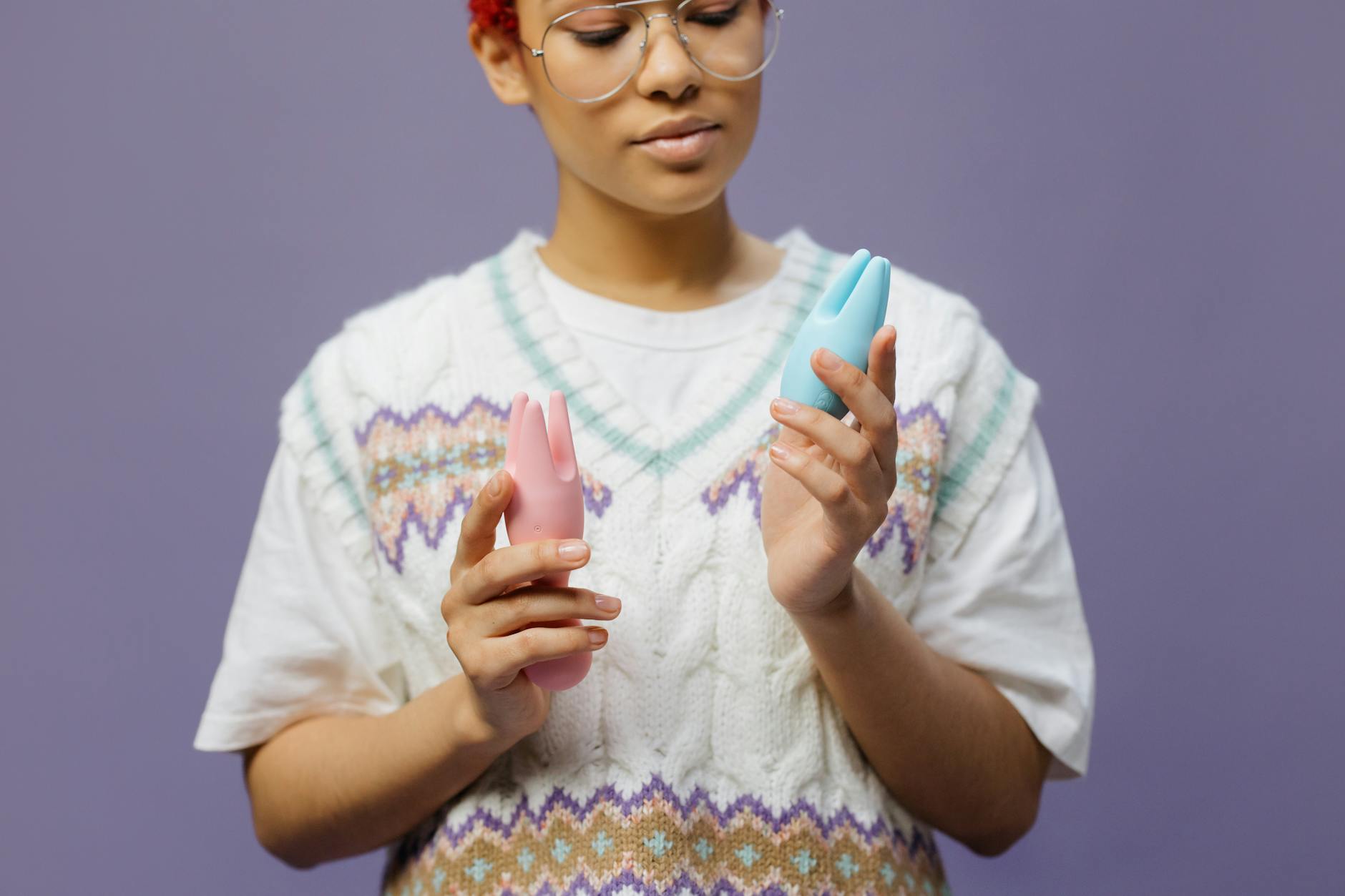
Show him the toy beforehand if he hasn't seen a lemon vibrator. Let him hold it. Explain that it's not replacing him. It's expanding what's possible. Many people with penis feel threatened by toys until they understand they're designed to do something his body can't: deliver sustained, precise stimulation to the clitoris while he's inside.
For some couples, that conversation happens weeks before you actually use it. That's fine. Trust builds slowly.
The practical setup that works
There are roughly three scenarios, and each has a different rhythm.
Scenario 1: You use it during foreplay while he recovers. This is the gentlest entry point. Spend 10-15 minutes on you with the lemon vibrator while he's recovering from his own arousal. He can watch. He can help. He can apply lubricant. This removes the pressure of him having to last through your entire pleasure arc and often results in a second round where he's more controlled.
Scenario 2: You use it during penetration. You're on top or he's entering from behind, and you're holding the lemon vibrator against your clitoris. This requires comfortable positioning and open communication about what angles work. The advantage: you both get to orgasm at the same time, which is powerful for rebuilding confidence. The challenge: you're managing more variables, so practice matters.
Scenario 3: He holds it while inside you. This requires trust and communication mid-act, but it can feel incredibly intimate. He's actively participating in your pleasure while he's in you, which changes the dynamic from "waiting" to "partnering." Some couples find this shifts the shame around finishing quickly into something collaborative.
Start with Scenario 1. It's lowest pressure and highest success rate.
Managing the emotions that show up
Here's what I see in my practice: introducing a toy sometimes triggers old insecurity. Maybe he thinks his presence isn't enough. Maybe you worry he'll see the vibrator as proof that he's failing. These feelings are normal. Don't skip them.
After the first time you use a lemon vibrator together, check in. Not "Did you like it?" but "How did that feel for you? Any feelings come up?" This opens space for him to say things like "I felt a little weird at first, but then I loved watching you" or "I felt relieved" or "I want to try it differently next time."
Honor whatever comes up. Shame thrives in silence. It dissolves in conversation.
The deeper benefit most people don't talk about
When you shift from "his pleasure is the main event" to "both our pleasures matter equally," something changes in the relationship beyond sex. You're practicing mutual prioritization. You're saying your orgasm is worth slowing down for. You're worth the extra time and attention. That message creeps into other parts of your partnership.
Many couples report that using a lemon clitoral vibrator together actually improved communication about other needs too. If you can talk openly about pleasure and timing in sex, talking about household division or emotional needs suddenly feels less scary.
When to involve actual support
If premature ejaculation is persistent and the anxiety around it is affecting his mental health or your relationship satisfaction, a sex therapist is worth considering. There are evidence-based techniques like the stop-start method or the squeeze technique that work for some people. A provider can also rule out medical factors like hormonal imbalance or side effects from medications.
But in my experience, most couples find that the simple act of shifting focus from penetration to clitoral stimulation, with a tool like the lemon vibrator, resolves the timing issue naturally. Pressure lifts. Pleasure returns. And often, once the shame is gone, the premature ejaculation softens on its own.
Building a shared language around pleasure
After a few sessions with the lemon vibrator, you'll probably develop your own shorthand. "Should we bring the toy?" becomes easier than rehashing the whole dynamic. Patterns emerge. Maybe he realizes he lasts longer in certain positions. Maybe you discover the vibration pattern that gets you there fastest. Maybe you both laugh about something awkward and it becomes an inside joke.
This is intimacy. It's messy and sometimes imperfect, but it's honest. And honestly, that's where the real connection lives.
FAQ
Can using a vibrator during sex make his premature ejaculation worse?
No. In fact, focusing on your pleasure often reduces performance anxiety for him. When he's engaged in your pleasure rather than worrying about his own arousal, his nervous system downregulates. Many partners report lasting longer once a vibrator becomes part of the routine because the pressure to perform vanishes.
What if he feels threatened by the lemon vibrator?
That reaction usually comes from not understanding the tool's purpose. A lemon clitoral vibrator doesn't compete with his body. It's designed to stimulate the clitoris in a way that no body can replicate. Frame it as an enhancement to what you two do together, not a replacement for him. Some partners feel less threatened once they understand the neurophysiology. Show him articles. Let him ask questions. Shame around toys is learned, not innate.
How long should I use the lemon vibrator during partner sex?
There's no rule. Some people need five minutes. Some need twenty. The idea is that you reach orgasm on your timeline, not his. If his goal is to last until you finish, then however long that takes is the right duration. This removes the race mentality entirely.
Should I use the vibrator before he enters, or during?
Both work, but they create different experiences. Using it during foreplay while he recovers is less pressure. Using it during or after penetration means you're building toward shared orgasm. Experiment and see what feels better. There's no wrong answer.
What if we're embarrassed to talk about this with each other?
Embarrassment usually means you need to practice the conversation outside the bedroom first. Write it down if that helps. "I've been thinking about trying a vibrator together because I want us both to feel satisfied" is a sentence you can literally read aloud if talking feels too hard. Once you've said it once, it gets easier. And I promise you, this conversation is far easier than continuing in a cycle of disappointment.
Can a lemon vibrator actually help him last longer over time?
Indirectly, yes. When the pressure to perform disappears, many people naturally develop better arousal control. Over months or years of partnered sex where both people's pleasure is prioritized equally, his anxiety may decrease enough that premature ejaculation stops being an issue. But the goal isn't to fix him. The goal is to build pleasure and connection for both of you right now.
The real win
I've worked with dozens of couples stuck in this exact dynamic. The ones who moved past it weren't the ones who fixed his timing. They were the ones who stopped making his timing the central problem. They picked up a lemon vibrator. They talked about it. They laughed. They tried it. And somewhere in that process, sex stopped being about performance and started being about partnership.
That's available to you too.