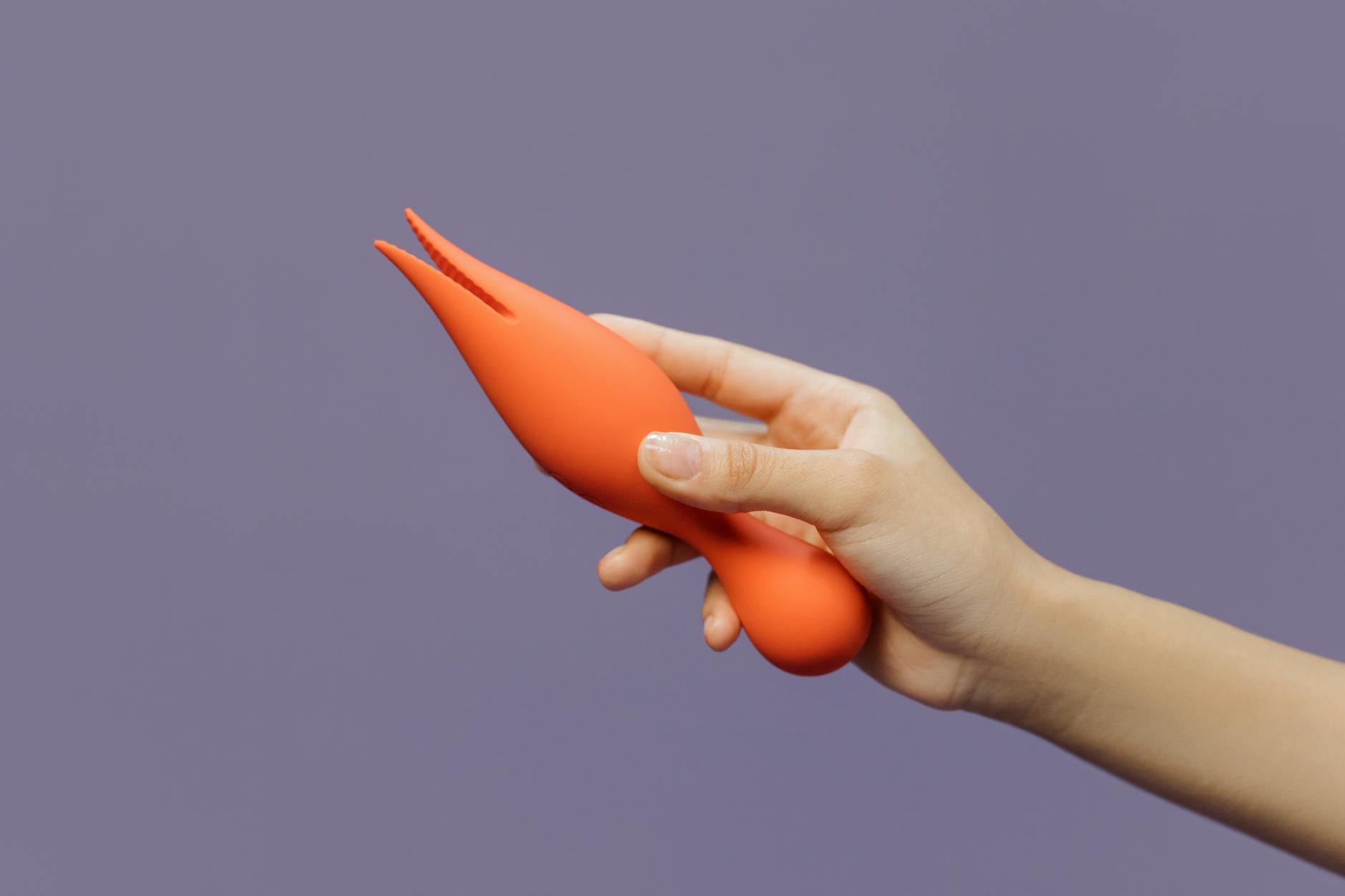
Here's the thing nobody tells you about hormonal IUDs and pleasure
You get a hormonal IUD for contraception, period management, or both. Nobody mentions that it might also change how your clitoral vibrator feels. Not in a bad way necessarily, but differently enough that it can feel jarring if you're not expecting it. The lemon vibrator you've been using for two years might suddenly feel too intense, not intense enough, or weirdly distant from what you felt last week.
That's not in your head. Hormonal IUDs (like the Mirena, Skyla, or Kyleena) release a synthetic progestin directly into your system. Over time, it suppresses ovulation and thins the uterine lining. It also affects estrogen production, clitoral tissue sensitivity, and how your nervous system registers sensation. When you're using a clitoral vibrator like the Lem, you're working with a body that's biochemically different than it was before insertion.
The good news: you're not broken. The shift is temporary in some cases, permanent in others, and almost always workable once you understand what's happening.
What a hormonal IUD actually does to sensation
The synthetic progestin in a hormonal IUD doesn't just stay in your uterus. It circulates through your bloodstream at much lower levels than birth control pills, but it circulates nonetheless. This affects your body in three ways that matter for pleasure.
First, estrogen availability drops. Estrogen keeps clitoral tissue plump and responsive. Lower estrogen means thinner epithelial tissue, less blood flow during arousal, and sometimes a delayed start to the whole arousal cascade. You might notice it takes longer to feel tingles, longer to build toward orgasm, or a flattened intensity overall.
Second, your pelvic floor gets less hormonal support. The muscles and connective tissue of the pelvic floor depend on adequate estrogen. When it's lower, that region has less elasticity and sometimes more tension. For some people, this makes a lemon vibrator feel sharper. For others, it creates a numb, distant sensation. Both are real responses to a real hormonal shift.
Third, your baseline nervous system state changes. Progestin is calming. It lowers cortisol and makes you generally more relaxed. That sounds good, and in many ways it is. But paradoxically, it can also blunt arousal. Your nervous system takes longer to shift into the parasympathetic state where pleasure lives.
Why some lemon vibrators feel different than others
Not all vibrators are created equal when it comes to hormonal sensitivity. The Lem uses gentle air-suction technology. It doesn't require the same tissue responsiveness as a traditional vibrator. For people on a hormonal IUD, this can actually be a win. Suction engages the entire clitoral network, not just surface sensation. If your direct clitoral sensitivity has dimmed, suction can reach deeper nerve clusters without punishing thin tissue.
But here's where it gets tricky. Some people report that the Lem feels too strong after IUD insertion. Others say it's now their only option because everything else is too sharp. The difference comes down to individual tissue response. Some bodies tighten around a hormonal IUD. Others loosen. Some get more sensitive. Others go numb.
There's no way to predict which camp you'll land in without trying. But you can troubleshoot systematically.
The adjustment timeline
Your body doesn't flip a switch the moment an IUD is placed. Hormone levels shift gradually over the first three to six months. That means your pleasure response isn't static. It's moving.
Weeks 1-2: You're mostly dealing with insertion cramping and inflammation. Pleasure is not the priority. Your pelvic floor is tense, your nervous system is in protection mode. This is not the time to expect consistent sensation from any vibrator.
Weeks 3-8: Cramping eases. Hormone levels begin shifting. You might notice arousal takes longer, or orgasms feel flatter. Some people report hypersensitivity here. The variance is wild.
Months 2-6: The real stabilization happens. By month four or five, most people have a clearer sense of their new baseline. This is when you can actually test whether a lemon vibrator still works for you, or if you need to adjust your approach.
Month 6 onward: Most hormonal shifts have settled. If you're still experiencing significant changes in sensation, it's worth talking to your gynecologist. Sometimes a different IUD formulation works better. Sometimes a topical estrogen cream helps. Sometimes you just need new tools.
How to troubleshoot with a lemon vibrator
If your Lem or other clitoral vibrator feels off post-insertion, run through this sequence before deciding it's broken or you're broken.
Start with lubrication. More than you think you need. Hormonal shifts often affect natural lubrication, even though you're not drying out completely. A water-based lube reduces friction and gives sensation more room to breathe. It's not a permanent solution, but it's a useful diagnostic. If lube changes everything, you know lubrication is part of the picture.
Try a lower intensity setting. If your Lem has multiple patterns, dial it back. Start at pattern one or two instead of where you used to live. Your tissue might need gentler input right now. This isn't permanent. But it gives your nervous system a chance to wake up without shocking it.
Extend your warm-up time. Give yourself fifteen to twenty minutes before touching your clitoris with the vibrator. Touch other parts of your body. Pay attention to breath. Let arousal build gradually. Hormonal IUDs can make quick-start arousal harder. But slow arousal still works.
Consider the Lem's suction pattern. If direct vibration feels wrong, try the suction without any pulsing. The Lem's pure suction mode engages different neural pathways than intense vibration. Some people find that the softer input is exactly what they needed.
Take a week off and try again. Sometimes the issue isn't the hormone shift, it's your nervous system being in a low-arousal state because of stress, sleep, or just the adjustment period. Stepping away for a few days and returning with fresh energy can reset your sense of what's possible.
When to talk to your doctor
If sensation has completely disappeared after two months, or if you're experiencing pain during pleasure that wasn't there before, reach out to your gynecologist. You're not overreacting. Some people do have a harder time with certain IUD formulations. The Mirena releases more progestin than the Kyleena or Skyla. If you're on the Mirena and struggling, a switch to a lower-dose option might help.
Also check in if you notice vaginal dryness that's worsening over time, or if you're getting friction pain even with lubrication. These are signs of lower estrogen, and they're treatable. A vaginal estrogen cream (like Estrace) adds back localized estrogen without significantly changing your systemic hormone levels. Some people use it two to three times a week and find their pleasure response returns to baseline.
The part about pleasure and pelvic floor connection
Here's something that often gets missed: your pelvic floor's tension state matters enormously for how vibrators feel. A hormonal IUD can increase pelvic floor tension in some people. When your muscles are braced, a lemon vibrator can feel overwhelming. The intensity isn't actually higher, but your clenched tissues interpret it that way.
You can work on this independently. Pelvic floor physical therapy helps. So does breathwork. When you're using a clitoral vibrator, focus on exhaling fully and letting your pelvic floor relax on each breath. If you're holding your breath or tensing, you're working against sensation instead of with it.
The longer view
Most people find their groove with a hormonal IUD within six months. Some discover they actually prefer the sensation profile of their IUD-shifted body. Others decide they want a hormone-free option and switch. Both are legitimate. The important thing is knowing that the change is real, measurable, and not something you caused or deserve. Your nervous system is responding to a real biochemical shift. That's information you can work with.
If you've been using a lemon vibrator or other clitoral vibrator for years, an IUD insertion is a reasonable moment to check in with what you actually want from pleasure now. Maybe the Lem still works perfectly. Maybe you want to try a different intensity, pattern, or approach. Maybe you want to explore other Hello Nancy tools alongside it. There's no wrong answer. You're just adjusting to your body as it actually is right now.
People also ask
Will a hormonal IUD permanently change how my clitoral vibrator feels?
Not necessarily. Some people find sensation shifts back closer to baseline after a year or two. Others settle into a new normal that's actually more pleasurable than before. The progestin dose matters too. Lower-dose IUDs like the Kyleena tend to have less dramatic sensory effects than the Mirena. If you're struggling at month six or beyond, talking to your gynecologist about switching formulations is worth considering.
Can I use a lemon vibrator right after IUD insertion?
Technically yes, but honestly wait. Your pelvic floor is inflamed, your nervous system is in protection mode, and your cramping will make genuine sensation impossible. Most gynecologists recommend waiting a week or two before any internal pleasure activity, and three to four weeks before using a vibrator externally on an irritated clitoris. There's no prize for rushing this. Let your body settle first.
If my Lem feels too intense after my IUD, is something wrong with me?
No. Your sensation threshold has genuinely changed due to hormonal shifts and pelvic floor state. Your body isn't broken. You just need to recalibrate your approach. Try lower intensity settings, longer warm-up time, more lubrication, and a gentle pelvic floor breathing practice. If those don't help after a few weeks, a conversation with your gynecologist about estrogen cream or a different IUD is reasonable.
Does every hormonal IUD affect pleasure the same way?
No. The Mirena releases about 20 micrograms of levonorgestrel daily. The Kyleena releases 5-19 micrograms depending on year of use. The Skyla releases about 5-7 micrograms. Lower doses mean less systemic hormone circulation and often less impact on clitoral sensation. If you're on the Mirena and struggling, the Kyleena might be a better fit. But individual variation is huge. Some people on the Mirena have zero sensation changes. Others on the Kyleena notice significant shifts.
Is it normal to feel numbness in my clitoris after getting an IUD?
Partial numbness is more common than you'd think, and usually reversible. It typically comes from pelvic floor tension and reduced blood flow to the area, both of which are hormonal effects. Pelvic floor physical therapy, topical estrogen cream, and gentle warm-up time help most people recover sensation within two to three months. If it persists beyond six months, that's a conversation for your doctor.
Can I switch vibrators if my Lem doesn't feel right with my IUD?
Yes. Some people find that a different Hello Nancy tool works better with their IUD-shifted body. But before you switch, try troubleshooting with lubrication, intensity settings, and warm-up time. The Lem's suction design is actually quite compatible with lower sensation states. You might just need to use it differently, not abandon it entirely.
The takeaway
A hormonal IUD changes your body's hormonal landscape. That includes how your clitoris responds to stimulation. For some people, it's a small shift. For others, it's significant enough to warrant adjusting your entire pleasure routine. The lemon vibrator you loved before insertion might feel different now. It might feel better. It might need a different approach. That's not failure. That's just adaptation. Your body deserves tools and techniques that match how it actually works right now, not how it worked before. If you want to explore what works best for you during this transition, reach out to talk through options that fit where you are.
Resources
- American College of Obstetricians and Gynecologists. "Intrauterine Devices (IUDs)." ACOG Patient Education.
- Peixoto, H., & Barlow, D. H. (2018). "Sexual dysfunction and hormonal IUD use: Evidence and clinical recommendations." Contraception, 97(5), 384-391.
- Wallwiener, M., et al. (2015). "Sexual Satisfaction in Long-Acting Reversible Contraception: Levonorgestrel-Releasing Intrauterine System vs. Copper Intrauterine Device." American Journal of Obstetrics and Gynecology, 212(4), 428.e1-428.e8.