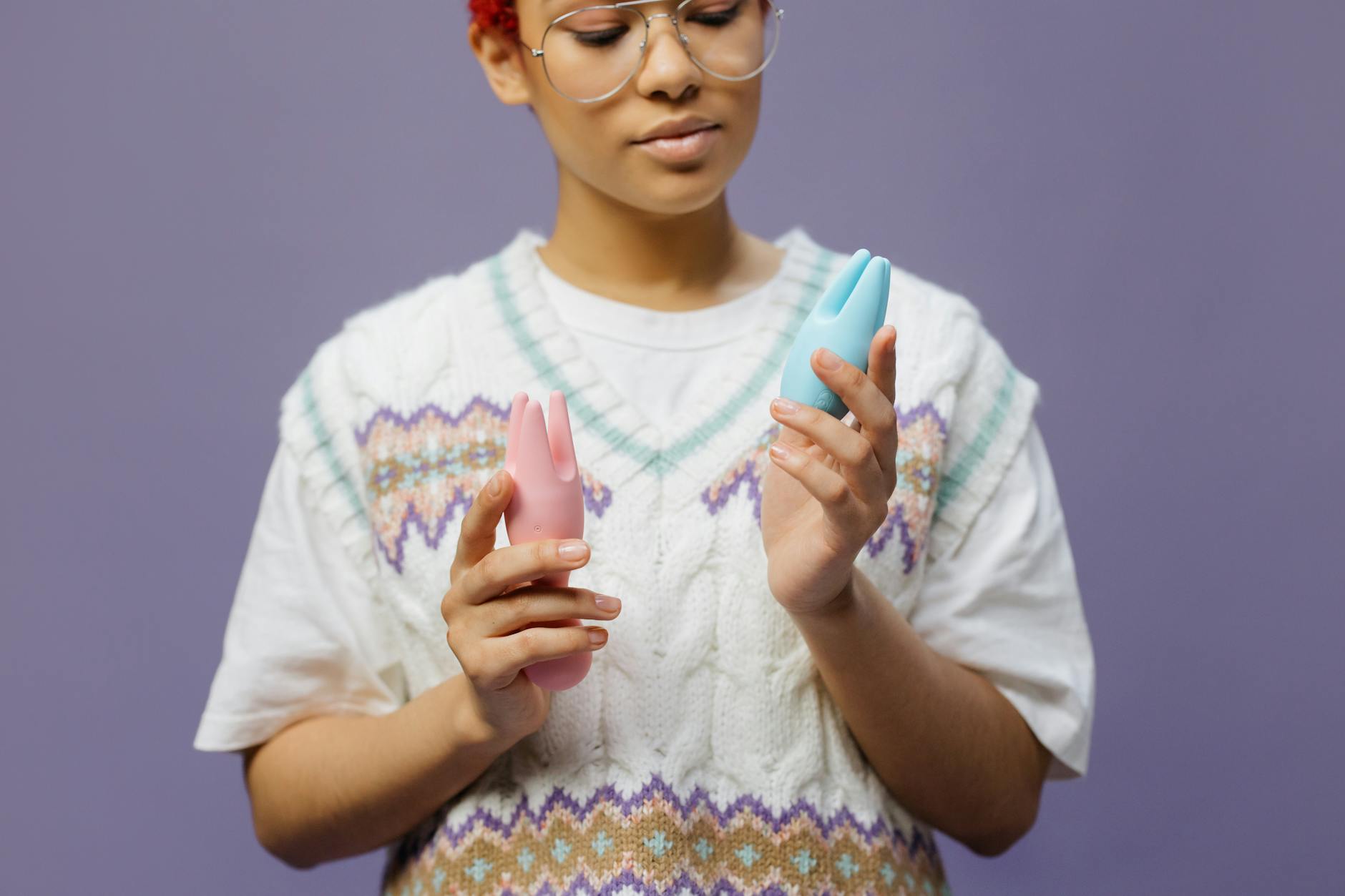
Let's talk about the number game
Honestly, the biggest mistake I see with lemon vibrators is assuming that highest intensity equals best sensation. It doesn't. In fact, chasing the max setting is how most people accidentally desensitize their nerve endings or miss the patterns that actually feel incredible.
Intensity is real, but it's one tool in a much bigger toolkit. What matters more is understanding what intensity actually does to your body, when you need it, and what happens when you skip around instead of building slowly.
What intensity actually changes in your body
When you increase the intensity on a lemon clitoral vibrator, you're not just making it "stronger." You're changing the frequency and amplitude of vibration, which affects how your nerves fire and how deeply the sensation penetrates tissue.
At lower intensities, the stimulation is more localized and precise. Your nervous system gets clear signals and can respond gradually. At higher intensities, the stimulation spreads across a wider area and fires nerve endings more rapidly. This can feel overwhelming, numbing, or occasionally perfect, depending on your current arousal level and what you're trying to achieve.
Here's the part that matters clinically: your body has a responsiveness threshold. Below it, sensation is pleasant but diffuse. Above it, pleasure concentrates and intensifies. But way above it? You lose nuance. The feeling flattens into general buzzing rather than distinct pleasure.
Most people's sweet spot is somewhere in the middle-to-upper range, not the absolute maximum.
The pattern-versus-intensity hierarchy
I talk with couples constantly about vibrator use, and the thing I notice is that people obsess over the number and ignore the pattern. This is backwards.
A good pattern at moderate intensity will almost always outperform a flat, maxed-out buzz. Patterns create rhythm and variation, which keeps your nervous system engaged. Flat intensity, no matter how high, gets boring to your nerve endings after 5-10 minutes because there's nothing surprising happening.
When you're using a lemon vibrator, think of it like music. A song at high volume with no melody is just noise. A song with dynamic range, tempo shifts, and texture at moderate volume is what keeps you listening. Your body works the same way.
This is why the lower settings on many clitoral vibrators, especially air-suction devices like the Lem, often feel more intense than you'd expect. The pattern does most of the work.
How to actually find your intensity sweet spot
Start low. Not because you're fragile, but because sensation is cumulative and you want to feel what's actually happening instead of jumping straight to overwhelm.
Begin at setting 1 or 2. Use it for 2-3 minutes and pay attention to what you feel. Does it feel pleasant? Annoying? Like you're waiting for something more? This feedback matters. Your body is telling you something about where your arousal is right now.
If it feels too soft, increase by one level and try again. If it feels right, stay there for a while. The goal is not to race to the end. It's to find the point where sensation feels specific, responsive, and pleasurable without being aggressive.
Many people find their optimal setting is somewhere between 3 and 6 on a 10-level device. Rarely the maximum.
One more thing: your sweet spot will change based on where you are in your cycle (if you menstruate), stress levels, how aroused you already are, and what time of day it is. Morning and evening can feel wildly different. This is normal. It's not that one setting is "right." It's that intensity is contextual.
Why lower intensity can feel more intense
This confuses people, so let me explain clearly.
When you're less desensitized, lower intensity can produce stronger orgasms because your nerve endings haven't been numbed. You're working with full sensitivity, so every vibration registers. With higher intensity, you're asking your nervous system to handle more input, which can actually require more total stimulation to trigger orgasm because you're already partly fatigued.
This is especially true if you use a lemon vibrator frequently. If you use the same intensity every time, your body adapts. Sensitivity drops. You need more intensity to feel the same effect. It's not permanent desensitization. It's temporary neural adaptation, and it reverses quickly if you vary your intensity and give your nervous system recovery time.
The fix is simple: rotate your intensities. Use 4 one day, 6 the next, back to 3. This keeps your nerve endings responsive and actually makes lower intensities feel better over time.
When to use higher intensities (and when not to)
Higher intensities serve specific purposes. They're not universally better, but they're useful in particular situations.
Use higher intensities when you're already very aroused and chasing a specific kind of orgasm, like a stronger clitoral or blended orgasm. Use them when you want to shorten your session and reach climax quickly. Use them when you're exploring what your upper limit actually is, just for curiosity.
Don't use higher intensities if you're just starting to build arousal, if you want to prolong pleasure, or if you're experimenting with a partner for the first time. Don't use them if you notice numbness or if you feel tension rather than pleasure.
If you're using a lemon clitoral vibrator with a partner, lower intensities also feel better because they allow more room for sensation variation and responsiveness. Your partner can see and feel your reactions clearly instead of watching you numb out trying to reach orgasm against relentless buzzing.
The role of lubrication in intensity perception
Here's something I don't see discussed enough: how much lubrication you use changes how intensity feels.
With minimal or no lube, vibration transfers directly to tissue and feels more intense. With generous lubrication, vibration diffuses slightly and feels smoother and less aggressive, even at the same intensity level. This is why people recovering from surgery or managing sensitive tissue often benefit from more lube plus lower intensity, rather than either adjustment alone.
If you're finding a certain intensity uncomfortable or overstimulating, before you assume your sensitivity is off, try adding more lubrication. Often that's the adjustment that makes everything feel better.
What intensity means for different body types
General tissue differences affect how intensities feel. People with thinner or more sensitive tissue, including many who have gone through menopause, often prefer lower-to-moderate intensities because higher settings can feel raw or irritating rather than pleasurable. This isn't weakness. It's just anatomy.
If you've never tried a lemon vibrator before, or if you're working with tissue sensitivity from any cause, start at setting 2 or 3 instead of assuming you need to work up to 7 or 8. You might find your perfect intensity is lower than you expected, and that's completely normal.
Meanwhile, some people genuinely prefer higher intensities and reach them comfortably without issue. The key is finding what works for your body specifically, not what works for someone else's.
Building intensity tolerance (when it matters)
There's a difference between temporary adaptation and permanent desensitization. Temporary adaptation is when your body gets used to a certain intensity and you need slightly more to feel the same effect. It's reversible. Permanent desensitization is rare and usually only happens with chronic overuse of high intensity over months.
If you notice you're creeping up intensity levels over weeks, the fix is rotating patterns and intensities intentionally. Don't just keep climbing. Instead, deliberately drop back to lower settings for a week or two, use different patterns, and let your sensitivity refresh.
This is why building a varied routine matters more than finding the "one perfect intensity" you use every single time.
Common intensity mistakes to avoid
Don't assume maximum intensity means maximum pleasure. Don't stay at one intensity forever and expect it to feel the same. Don't use high intensity for extended periods hoping to "break through" numbness. That makes it worse.
Don't skip the warm-up. Jumping straight to high intensity without arousal buildup feels chaotic, not good. Don't ignore your body's feedback. If something feels uncomfortable rather than pleasurable, lower the intensity instead of pushing through.
Most importantly, don't compare your intensity preference to someone else's. Your nervous system is yours alone.
FAQ
What intensity setting should I start with on a lemon clitoral vibrator?
Start at setting 1 or 2 and spend 2-3 minutes observing how it feels. Increase gradually only if you want more sensation. Most people find their sweet spot between settings 3 and 6. There's no "right" starting point across all bodies, so your feedback is the only guide that matters.
Can using a lemon vibrator on high intensity permanently damage nerve sensation?
No. Temporary neural adaptation happens with repeated high intensity use, but it reverses within days or weeks of using lower intensities or taking breaks. Permanent desensitization is extremely rare and requires months of chronic overuse. Varying your intensity and patterns naturally prevents this.
Why does a lower intensity sometimes feel more intense than a higher one?
When your nerve endings are less fatigued, lower intensities register more clearly and can produce stronger orgasms. Higher intensity fatigues nerve endings slightly, so you need more total stimulation to trigger orgasm. Rotating your intensities keeps sensitivity high and makes lower settings feel genuinely intense.
Does lubrication change how intense a vibrator feels?
Yes. More lubrication diffuses vibration and makes the same intensity feel smoother and less aggressive. Less lubrication makes intensity feel sharper and more direct. If a certain intensity feels uncomfortable, adding lubrication can make it feel better without lowering the intensity level.
What's the difference between intensity and pattern on a vibrator?
Intensity controls how strong the vibration is. Pattern controls the rhythm and variation of that vibration. Patterns are often more important for sustained pleasure because they keep your nervous system engaged. A good pattern at moderate intensity usually outperforms a flat buzz at high intensity.
Is it normal for my ideal intensity to change from day to day?
Completely normal. Your intensity preference shifts based on arousal level, stress, cycle day if you menstruate, time of day, and overall well-being. What feels perfect one day might feel too much or too little another day. This flexibility is healthy and means your body is responsive.
The real takeaway
Intensity matters, but it's not the whole story. Finding your sweet spot is about understanding what intensity actually does to your body, respecting your current arousal and sensitivity, and varying your approach intentionally instead of chasing maximum power every single time.
Your pleasure is nuanced. Your intensity choice should be too. If you're looking to deepen your understanding of what works for your body, a device like the Lem gives you enough variation to experiment safely and discover what actually feels best, not just what feels strongest.
Your body knows what it needs. The intensity dial is just a tool for listening.