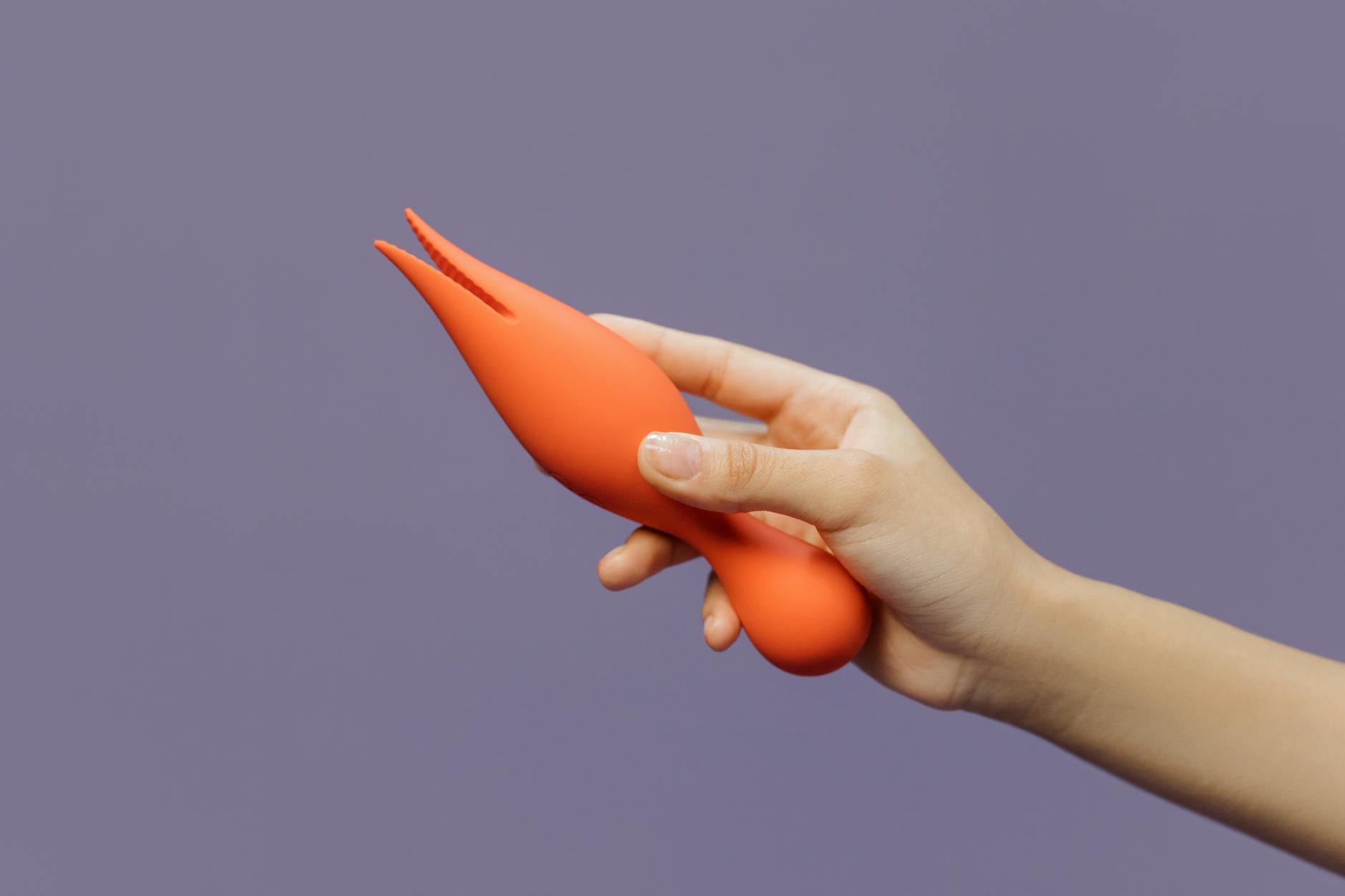
How a Lemon Vibrator Closes the Orgasm Gap During Partner Sex
Let's be real: somewhere between 65 and 85 percent of people with vulvas don't orgasm from penetration alone. That's not a personal failure. It's anatomy. And yet most of us spend years thinking something's wrong with us instead of asking whether the setup itself makes sense.
Here's the gap that matters. During partnered sex, the stimulation that typically gets the most focus—penetration—is often the least effective for orgasm. The clitoris, which houses most of the nerve endings involved in pleasure and climax, usually gets minimal attention. That's not an accident. It's just how a lot of people learned to have sex.
A lemon vibrator changes that equation. Not because it's magic, but because it puts clitoral stimulation front and center where it works. And when both partners understand how that actually helps, everything shifts.
The orgasm gap is not about desire
Most couples I work with assume the orgasm gap means something's missing: desire, attraction, technique. Usually it's none of those. It's that the person with the vulva is getting the wrong type of stimulation for their body.
Penetration alone triggers orgasm in maybe 10 to 20 percent of people with vulvas. That's not a bug—it's how bodies work. The penetrating partner often climaxes relatively easily because the mechanics of penetration do a solid job of stimulating them. But for the receiving partner, the angle, speed, and type of friction usually don't align with what triggers orgasm.
So both partners end up frustrated. The penetrating partner feels like they should be "doing it right." The receiving partner feels broken for not responding. Neither is true.
A lemon clitoral vibrator short-circuits that whole dynamic. It adds the stimulation that actually works, in a way that involves both partners.
Why a lemon vibrator specifically
Not all vibrators work the same during partnered sex. Wand vibrators are bulky and awkward to position. Rabbits have too much internal shaft to navigate around a partner's body. Bullets work, but they require a lot of hand positioning.
A lemon sucker—like the ones from Hello Nancy—is designed differently. It's compact, curved, designed to cup around the clitoris, and the suction mechanism doesn't require direct friction. That matters because during partnered penetration, tissues can be sensitive or slightly swollen. A suction-based clitoral vibrator delivers stimulation without the pressure or friction that can feel uncomfortable.
The shape also sits flush against the body. Your hands don't need to do acrobatic holds. It stays in place while you and your partner move together.
How to actually use it during partner sex
The mechanics are simpler than most couples expect.
If you're the receiving partner: you can hold the lemon vibrator yourself and control speed and positioning. This is often the best starting point because you know exactly what feels good. Start on a lower intensity setting—patterns 2 or 3 on a lem vibrator—and adjust up as arousal builds.
If your partner is holding it: communication is everything. "Lower," "faster," "keep that angle" are the kind of specific requests that actually help. Vague feedback like "that's good" doesn't give them much to work with.
Position-wise, most couples find that penetration from behind (whether that's spooning or a more active angle) gives the easiest access for a clitoral vibrator. Face-to-face works too, though it requires a bit more hand coordination.
The pacing question comes up a lot. Can your partner move while you use the vibrator? Yes. Should they? Usually not, at least at first. Let the vibrator do its job while the receiving partner stays relatively still. Once you both understand the sensation, you can experiment with rhythm combinations. But starting simple reduces overwhelm.
The mental piece (which matters as much as the physical)
Here's where a lot of couples get stuck. One partner is excited about adding a lemon vibrator. The other feels replaced, inadequate, or worried it's a sign their partner isn't satisfied.
None of that is usually true. But it's real enough that it needs addressing.
I tell couples to separate two conversations: "I want you to orgasm more easily" and "I'm happy with you." Those are not the same sentence. If they blur together, you end up in a conversation where introducing a toy feels like admitting failure instead of solving a logistics problem.
The receiving partner's pleasure is not a referendum on the penetrating partner's skill or attractiveness. It's a straightforward biological fact: most bodies need clitoral stimulation to orgasm. Adding that stimulation—whether through a hand, a mouth, or a lemon vibrator—is not a workaround. It's how it actually works.
Once that clicks, introducing a toy stops feeling like a threat and starts feeling like problem-solving. Which it is.
Intensity and sensation: what to expect
Most people are surprised by how gentle a lemon vibrator can feel, especially on lower settings. The suction mechanism doesn't feel like the buzzing pressure of a traditional vibrator. It's more like a soft pulling sensation.
Start low. Pattern 1 or 2 on a lem vibrator is genuinely subtle. You can talk, move, kiss, and stay connected while using it. It's not a solo experience where one person zones out on the vibrator and the other zones out waiting.
As arousal builds and the body responds, intensity often needs to increase. A lot of couples find that moving to pattern 4 or 5 in the final few minutes gets the job done. But that ramp-up is gradual and responsive, not a shock.
One note: if you're used to using a lemon vibrator solo, the sensation might feel different during partnered sex. The angle changes, the body's state of arousal is usually different, and the mental context shifts things. That's normal. Give yourselves a few tries before deciding it's not working.
Timing and rhythm
When should the vibrator come into play? Usually not from the start.
Most couples find that building arousal first—through foreplay, kissing, manual stimulation—makes the vibrator more effective. Introducing it when arousal is already high means the body responds faster. You also avoid the awkward moment of both partners trying to figure out what they're doing with a new tool when they're not even turned on yet.
A common rhythm: 10 to 15 minutes of foreplay without the vibrator. Introduce it as penetration begins or shortly after. Use it for the duration of penetration, adjusting intensity as needed.
If the receiving partner usually takes a long time to orgasm, this can cut that time significantly. Some couples are shocked by how much faster things move. That's fine. You can always extend foreplay if you want more time together.
What if it's uncomfortable
Discomfort is information. It usually means one of three things: the intensity is too high, the angle is slightly off, or you need more lubrication.
Turn the setting down. Seriously. Most people underestimate how much the intensity matters. A lem vibrator on pattern 1 is genuinely quiet and gentle. There's no shame in staying there.
Adjust position. A half-inch shift in angle can be the difference between "this feels weird" and "oh, that's good." This is where the receiving partner's guidance is crucial. They can feel what works.
Add lube. A water-based lubricant makes everything feel better—the penetration, the vibrator contact, the whole experience. It's not a sign something's wrong. It's just helpful.
If discomfort persists, pause and check in. Sometimes bodies just need a day. Sometimes the positioning needs rethinking. Sometimes one partner isn't actually ready for this yet, and that's okay. No pressure.
The relationship part
I've seen couples transform their entire sex life by bringing a lemon vibrator into partner play. Not because the toy is magic, but because it forces a conversation about what actually works. What stimulation matters. What feels good. What speed, pressure, and rhythm align with each person's body.
That conversation often leads to better communication overall. Partners learn to ask for what they want instead of assuming. They learn that pleasure isn't zero-sum—one person's orgasm doesn't diminish the other's experience.
You're not replacing intimacy. You're adding information. And that information usually makes things better.
FAQ: Lemon Vibrators and Partner Sex
Will using a vibrator during partner sex reduce attraction between us?
No. Toys exist in addition to your partner, not instead of them. Many couples find that better orgasms during partnered sex actually increase intimacy and connection. You're solving a logistics problem together, not replacing each other.
Can both partners use the vibrator, or is it just for one person?
Just one person at a time, usually. But if you're interested in mutual stimulation, some couples use multiple toys. A clitoral vibrator like a lemon for one partner and a different toy for the other is totally workable. The conversation is worth having.
What if my partner is worried about "performance" with a vibrator involved?
This is common and worth addressing directly. Remind them: a vibrator is not a commentary on their attractiveness or skill. It's solving a biological gap. Many penetrating partners feel relief when they realize their partner can actually orgasm now. The pressure lifts. Sex becomes more fun for both of you.
Is it normal to feel self-conscious using a toy with a partner for the first time?
Completely normal. That usually passes after the first time or two. Once you both realize it's not weird or awkward—it's just another tool—the self-consciousness fades. Starting with lights dimmed or in a position where you're not making intense eye contact can help ease into it.
How do I clean a lemon vibrator after partner sex?
Wash with mild soap and warm water, or use a toy cleaner. Pat dry. If you're using it again soon with penetration involved, make sure it's fully dry to prevent any issues. A quick rinse and dry between uses is fine.
Will a lemon clitoral vibrator work if my partner and I have different arousal speeds?
Yes. This is actually one of the biggest benefits. If one partner climaxes faster, the vibrator can help the other catch up without either person feeling rushed or pressured. You can move at the speed that works for both of you.
The bottom line
Most of the orgasm gap during partner sex isn't about the relationship. It's about anatomy and stimulation type. A lemon vibrator addresses that directly.
You're not adding it because something's broken. You're adding it because it works. And once you understand that, it becomes one of the simplest improvements couples can make to sex that feels actually better—and more connected—for both people.
If you're ready to explore this with your partner, start simple. Have the conversation first. Introduce the tool without pressure. And pay attention to what your body tells you. That feedback loop is where the real change happens.
Want help with the conversation part? Our contact team can point you toward resources on talking with partners about toys. Reach out anytime.