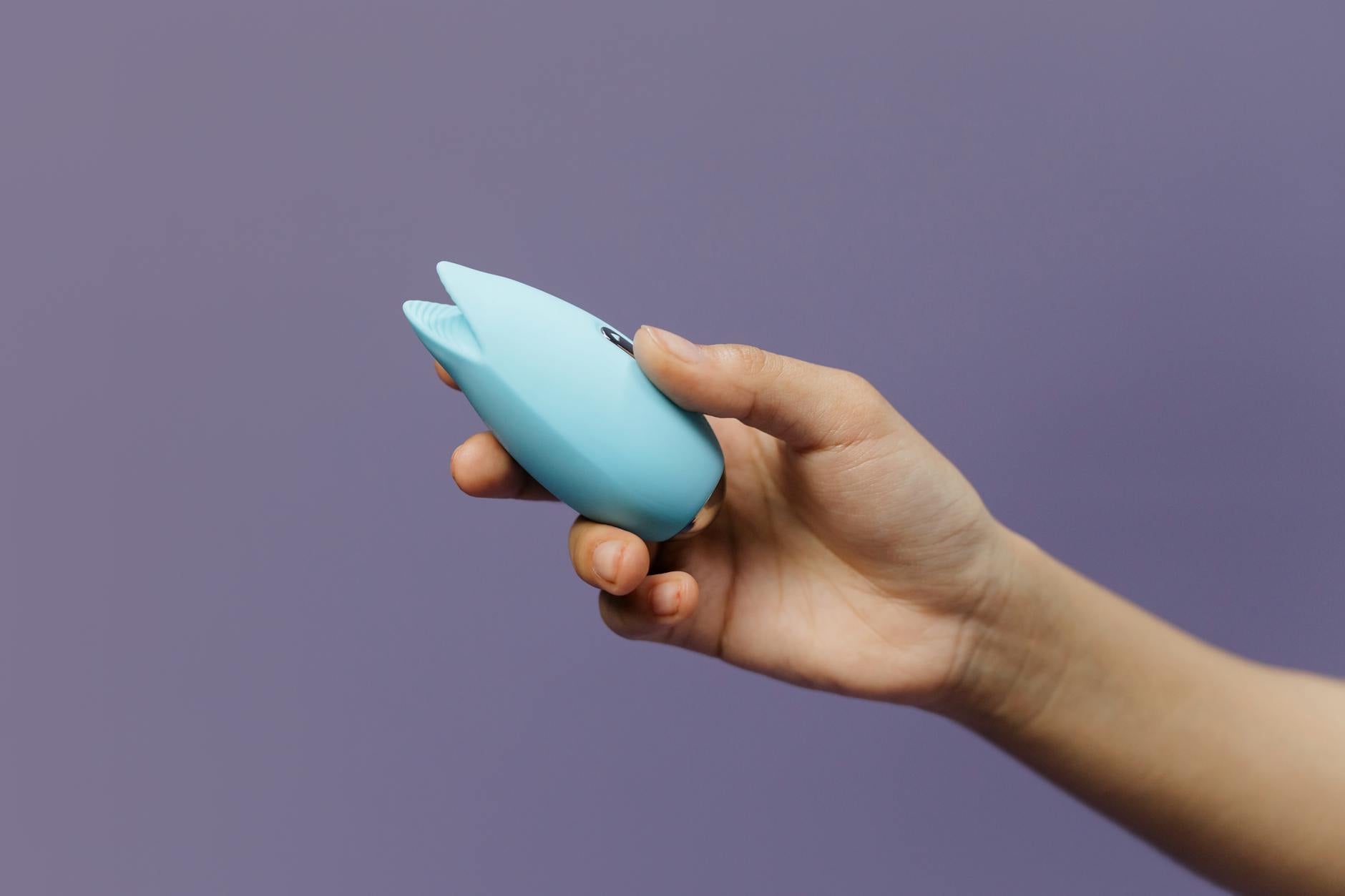
Let's talk about sensitivity loss
You used to feel everything. Now there's static. Maybe a lemon vibrator worked instantly before, but lately you're scrolling through three patterns before anything registers. That's not uncommon, and it's not a sign your body is failing you. It's a signal that something has shifted, and the good news is that sensitivity isn't a fixed trait. It responds to stimulus, blood flow, nervous system state, and technique. We can work with all of those.
Clitoral sensitivity drops for a handful of specific reasons, and each one has a real fix.
Why clitoral sensitivity actually changes
The clitoris is a network of eight thousand nerve endings concentrated in a space smaller than a pea. That density makes it exquisitely responsive, but it also makes it vulnerable to desensitization. Here's what causes it.
Overstimulation from routine. If you use the same toy on the same pattern at the same time every day, your nervous system learns to tune it out. This is sensory adaptation, and it's not laziness. Your brain gets efficient and stops bothering to signal "vibration detected" because it's already predicted what's coming.
Hormonal shifts. Estrogen, testosterone, and thyroid function all change how the clitoris receives and processes sensation. This is why sensitivity often dips after starting hormonal birth control, during certain phases of the cycle, or during perimenopause. Blood flow to the area changes, tissue thickness shifts, and nerve signaling gets quieter.
Nerve compression. Pelvic floor tension, poor posture during solo time, or tight underwear can literally compress the pudendal nerve that feeds sensation to the clitoris. Tension you don't even know you're holding can muffle sensation completely.
Medication side effects. SSRIs, some blood pressure meds, and antihistamines all have documented effects on genital sensation. If sensitivity dropped after a prescription change, mention it to your doctor. It's real and sometimes adjustable.
Psychological state. Anxiety, distraction, or being in a hurry dampens clitoral response. Your nervous system has to be in a parasympathetic state (rest and digest) to feel pleasure. If you're stressed, checking your phone, or thinking about work, your clitoris gets the memo that this isn't safe for pleasure.
How to reset clitoral sensitivity step by step
The goal is to make the clitoris "hungry" again for sensation, rebuild its responsiveness, and train your nervous system to stay present. This takes two to four weeks of consistency.
Step 1. Take a break from your usual tool. If you've been using the same lemon vibrator every day, pause for five to seven days. Let your nervous system forget what it expects. This is the hard part because it feels like the solution is more stimulation, not less. But your body needs novelty to wake up.
Step 2. Start with indirect touch. When you return to solo time, begin by stimulating around the clitoris, not directly on it. Use a lemon clitoral vibrator on the lowest pattern on the surrounding tissue, the inner labia, and the vestibule. Spend ten to fifteen minutes here before you go directly to the clitoral head. This rebuilds anticipation and blood flow without overwhelming the nerves.
Step 3. Introduce pattern variation. Don't just click between patterns mindlessly. Spend two minutes on each pattern. Slow down. Notice which one creates the first little spark of sensation. Stick with that one for a full week before rotating to a new pattern. Your nervous system will start to recognize each pattern and respond more deeply.
Step 4. Change position and angle. If you always stimulate head-on and straight, try angling the lemon vibrator. Press from the side. Use it through underwear first. Move it slightly in small circles instead of holding it still. Your clitoris has different zones and angles that light up different nerves. Varying position wakes up those dormant pathways.
Step 5. Use breathwork and pelvic floor release. During stimulation, breathe deeply into your belly, not your chest. On the exhale, consciously relax your pelvic floor. This sounds weird, but pelvic floor tension is the single biggest saboteur of clitoral sensation. If you're clenching, you're cutting off blood flow and compressing the very nerves you're trying to wake up. Relaxation first, arousal second.
The role of a lemon vibrator specifically
Why a lemon vibrator instead of a wand or a bullet? Three reasons.
First, the suction action works differently than traditional vibration. Instead of moving the tissue (which can cause adaptation faster), suction creates rhythmic pressure and release. This mimics the build and release cycle of arousal, so your nervous system recognizes it as "heading somewhere" and stays engaged. The tissue doesn't habituate as quickly.
Second, lemon adult toys tend to have multiple pattern options with clear rhythm progression. This built-in variety prevents the sensory flatline that happens with single-speed toys. You can genuinely change the stimulus without switching tools.
Third, the suction mechanism is gentler on sensitive or recovering tissue while still creating strong sensation. If sensitivity loss is tied to inflammation, irritation, or hormonal changes, a lemon sexual toy can deliver strong stimulation without the micro-damage that can happen with aggressive vibration alone.
Pattern sequencing that actually works
If you have a tool with eight patterns (like the Lem), don't just randomly bounce around. Use this sequence instead.
Week one: Pattern 1 only. Spend the entire session on it. Your job is to notice sensation, not chase orgasm. Notice when it starts, where it's strongest, what feels different today.
Week two: Patterns 1 and 2. Do five minutes on each. Don't go back and forth. Spend five minutes on pattern 1, then switch to pattern 2 and stay there. Notice the difference in how your body responds.
Week three: Patterns 1, 2, and 3. Same structure. Five minutes each, in order.
Week four and beyond: Patterns 1 through 8, five minutes each. By now, your nervous system has learned to recognize and respond to each one. You're no longer habituated. Start over with just patterns 5 through 8 for a month to vary which parts of your nervous system you're engaging.
When sensitivity loss is a sign of something medical
If you've tried the reset protocol for four weeks and nothing has shifted, or if sensitivity loss happened suddenly, talk to your doctor or a pelvic health physical therapist. Real causes require real answers.
Vestibulodynia, pudendal neuralgia, and dermatological conditions can all numb the clitoris. Thyroid dysfunction, diabetes, and vitamin B12 deficiency affect nerve function. These are treatable. The point is not to assume your body is broken after trying one technique for two weeks.
The mental part matters as much as the physical
Sensitivity also depends on permission. If you're solo and constantly second-guessing whether you're doing it right, whether you should be finished by now, or whether you deserve this time, your nervous system stays in fight-or-flight. Pleasure requires safety. That means scheduled time with no audience (including your own critic), no distractions, and explicit permission to take however long you need.
Many people find that sensitivity returns simply when they stop treating solo time as a chore to check off. When it becomes something genuinely worthwhile.
Common questions about rebuilding sensitivity
Will taking a break make me want it less?
Opposite. Scarcity increases desire. When you pause for a week, you actually rebuild dopamine responsivity. Your brain starts to crave the sensation again. That craving is what makes sensation feel strong.
How long does this actually take?
Most people notice shifts in two to three weeks. Full sensitivity restoration, if there's an underlying issue, takes four to eight weeks. Patience is the unglamorous secret ingredient.
Does a lemon vibrator work if I'm numb from medication?
Partially. A lemon clitoral vibrator can help by providing a different type of stimulus than vibration alone, and the novelty can help. But if numbness is a medication side effect, talk to your prescriber about dosage or timing. Sometimes taking the medication at night instead of morning makes a difference.
Can I use this technique with a partner?
Absolutely. Have them follow the same sequencing and pacing. The principle is the same: novelty, variation, and patience rebuild responsiveness.
What if I'm worried about never getting sensitivity back?
Sensitivity is not a finite resource that depletes permanently. It's a skill and a state. You can rebuild it. The framework above isn't a guarantee it will work in two weeks, but it's the evidence-based path forward. If you're in recovery from a specific issue, your progress might look different. That's normal.
Is a lemon vibrator actually better for this than other toys?
It's genuinely useful because of the suction mechanism, the pattern variety, and the lower risk of overstimulation. But if you have a toy you love, the reset protocol works with any device. Novelty and variation matter more than the specific tool.
The honest bottom line
Clitoral sensitivity is not a permanent state. It responds to what you do, how you show up mentally, and what your body is managing hormonally. If sensitivity has faded, that's information, not a sentence. Work through the reset protocol, introduce variation, and give yourself four weeks. Most people get real shifts in that window.
If you're using a lemon vibrator, the suction action gives you a genuine advantage because it works a bit differently than straight vibration. But the real tool is patience and the willingness to slow down and pay attention. That's what rewires sensitivity.
Your clitoris hasn't forgotten how to feel. It's just waiting for you to show up differently.