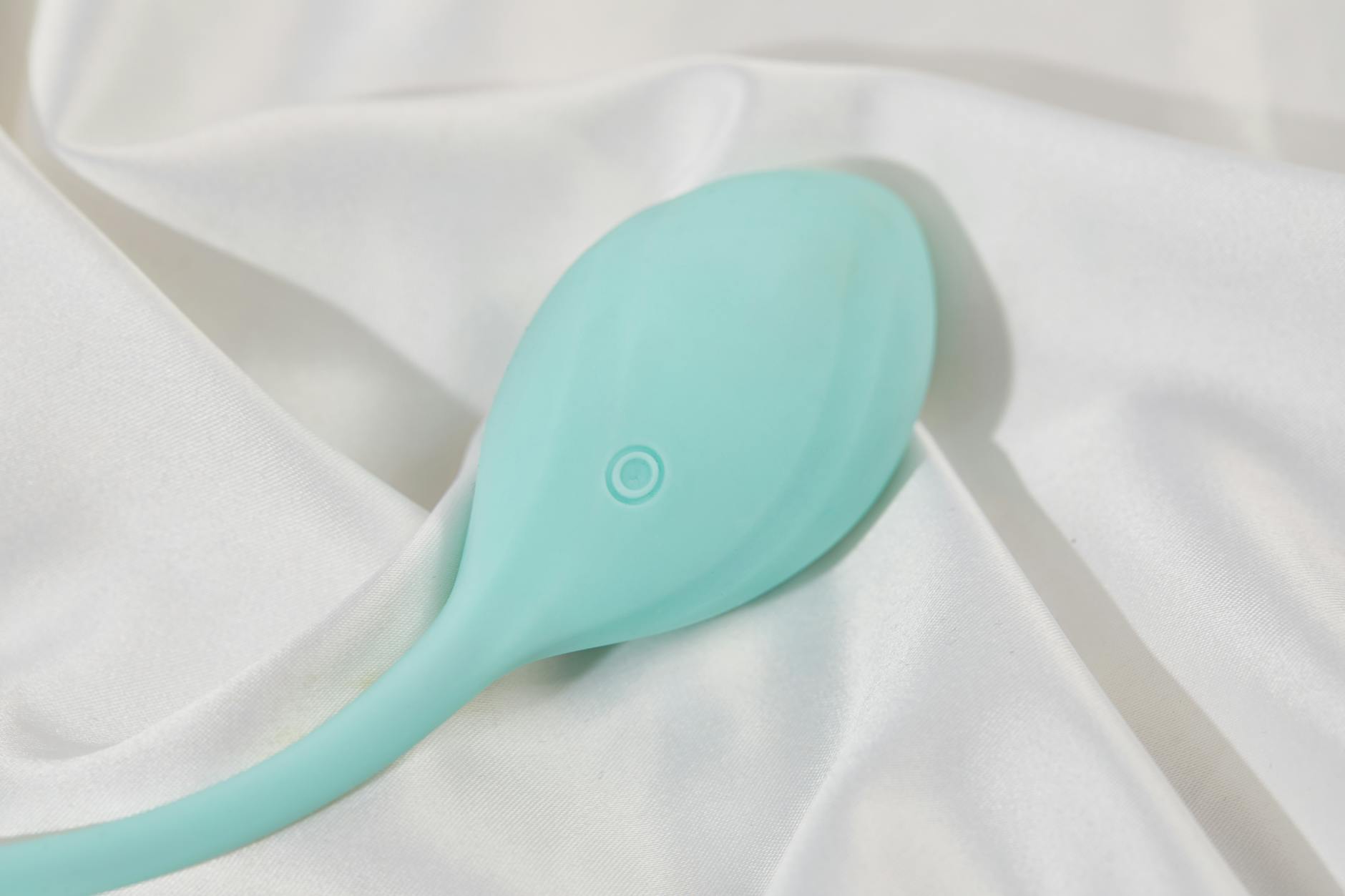
Your favorite clitoral vibrator just feels... different
You've been using the same lemon vibrator for years. It worked great. Now, for some reason, the intensity feels off, or the sensation doesn't build the way it used to, or honestly, you're not sure what changed at all. Here's the thing: your body probably did.
Hormonal fluctuations aren't just about your cycle anymore. Perimenopause, pregnancy, postpartum recovery, medication shifts, stress, and even significant relationship transitions can rewire how your nervous system responds to touch. That's not a problem with the toy. It's information.
How hormones actually change sensation
Estrogen and testosterone don't just regulate your cycle. They're directly involved in nerve sensitivity, blood flow to the vulva, and how quickly your brain registers pleasure signals. When these hormones shift, the entire chain of sensation changes.
Think of it like this: estrogen keeps the vulval tissue thick and well-supplied with blood vessels. When estrogen drops (even slightly, even temporarily), that tissue becomes thinner and less vascular. The same vibration pattern from your Lem hits differently because there's less tissue cushioning it and less blood flow making everything plump and responsive.
Testosterone, which everyone produces regardless of anatomy, directly affects desire and genital arousal. A drop in testosterone doesn't kill pleasure, but it can make arousal slower to build and require more intentional stimulation to kick off. You're not broken. The signal is just quieter.
Why some people swear by air-suction toys after hormonal shifts
This is where clitoral vibrators like the Lem start to make sense in a new way. Air-suction technology works differently than traditional vibration. Instead of creating friction against tissue, it creates a gentle seal and rhythmic pressure that draws blood into the area.
For bodies with thinner vulval tissue, this approach is genuinely easier on sensitive skin and often more comfortable. You get stimulation without the same mechanical pressure. The sensation builds differently too. Instead of a sharp, focused buzz, air-suction creates a wave-like feeling that many people find easier to orgasm with when hormones are in flux.
The lemon vibrator (or any good quality clitoral vibrator) also gives you granular control. You can start at pattern one and stay there as long as you need. No pressure to jump to high intensity. Hormonal shifts often mean you need more time in the warm-up phase, and a device that lets you go slow is a genuine game-changer.
The mental piece that nobody talks about
Here's what I see in my practice all the time: a person's body changes slightly, they assume their pleasure has died, and then anxiety locks down what hormones started.
Your nervous system is smart. If you've decided that clitoral stimulation "doesn't work anymore," your brain will confirm that belief by staying in fight-or-flight mode, which literally narrows blood vessels and makes arousal harder. It's a self-fulfilling prophecy.
The shift isn't that your capacity for pleasure disappeared. It's that your body is asking for different conditions to get there. Longer warm-up time. Different pressure. Maybe a partner who understands the shift. Possibly a lemon clitoral vibrator instead of whatever you were using before, because the technology actually suits your current nervous system state better.
Your job is to be curious, not catastrophic.
What actually changes with hormonal shifts (and what doesn't)
The things that definitely shift: tissue thickness, natural lubrication, arousal speed, orgasm intensity, and how long you can stay aroused before sensation fades.
The things that absolutely do not shift: your clitoral nerve density, your brain's capacity for pleasure, your fundamental desire (unless something else is going on), and your ability to have orgasms. Often, people report stronger, more focused orgasms after hormonal transitions, even if they took longer to reach.
The Lem and other lemon vibrators are built for real bodies with real variation. They're not designed for one ideal hormonal state. They scale. You can use them the exact same way you always did, or you can adjust based on what your body needs right now.
Five practical adjustments for hormonally shifting bodies
Start with a longer warm-up. Budget 20 to 30 minutes instead of 10. Your nervous system will catch up. Arousal is not a switch anymore. It's a dial.
Use lubricant even if you never needed it before. Water-based lube works with all materials and is worth the extra step. It's not a sign of failure. It's a tool.
Begin at the lowest intensity setting. On the Lem, that's pattern one. Stay there until your body asks for more. Patience pays off.
Pay attention to timing. If you're navigating perimenopause, some weeks might feel completely different from others. That's normal. Track what's working when, so you're not blaming yourself for natural fluctuation.
Consider the pressure style. If traditional vibration feels too sharp, air-suction technology (like the Lem uses) might click for you in a new way. It's not better or worse. It's just different, and different might be exactly what you need.
When to talk to a doctor
If something hurts, that's worth mentioning to a gynecologist or a menopause-trained provider. Genitourinary syndrome of menopause (GSM) is real and treatable. It's also not something you have to white-knuckle through.
If desire has genuinely vanished, not just quieted, talk to someone. Hormonal shifts can affect mood and motivation, but there are options. Testosterone therapy exists. Therapy exists. Trying a different toy exists. You have agency here.
If you're in a relationship and the changes feel like they're creating distance, couples counseling isn't failure. It's a map for getting back on the same page when your body has changed the rules mid-game.
The reality: hormonal shifts often make pleasure better, not worse
I know that's not the narrative you've been sold. But in my clinical experience, people consistently report that their most satisfying sexual experiences come after significant hormonal transitions. Not despite the changes. Often because of them.
Why? Less mental noise. More permission. Better tools. And finally, finally, the freedom to stop performing and start actually feeling.
Your body isn't broken because a lemon vibrator feels different now. It's evolved. Your job is to evolve with it.
People also ask
Why does my lemon vibrator feel weaker than it used to?
You're likely experiencing a genuine change in sensation, not a change in the device. Hormonal shifts affect nerve sensitivity and blood flow to the vulva, which changes how you perceive vibration intensity. The same pattern that once felt medium might now feel gentle. This is normal. You're not losing your capacity for pleasure. Your body is just asking for different conditions to get there.
Can hormonal birth control change how a clitoral vibrator feels?
Absolutely. Hormonal contraceptives, especially ones with lower estrogen doses, can shift vulval tissue thickness, lubrication, and arousal speed. Some people find they need a different toy or different settings after starting or switching birth control. It's worth tracking changes for a few weeks to see what you actually prefer, rather than assuming something is wrong.
Is air-suction technology better for hormonal changes than regular vibration?
It's not universally better, but it often feels better for people with thinner vulval tissue or those navigating hormonal transitions. Air-suction creates pressure without friction, which is gentler on sensitive skin and often easier to orgasm with when arousal takes longer to build. Try both and let your body decide.
Do lemon vibrators work differently after perimenopause?
The device works the same way, but your body's response to it changes. Many people find that lemon clitoral vibrators like the Lem actually become more effective after perimenopause because the technology suits thinner tissue better and the intensity control lets you stay in lower patterns longer. It's not that the vibrator got better. It's that you know yourself better now.
How long does it take to adjust to sensation changes from hormonal shifts?
Nervous system adaptation varies wildly. Some people adjust in weeks. Others take months. There's no universal timeline. What matters is approaching the shift with curiosity instead of panic. Track what works, adjust your approach, and give yourself grace. Your body isn't punishing you. It's just different.
Should I buy a new toy if my hormones changed?
Not necessarily. Start by experimenting with your existing toys at different intensities, with more warm-up time, and with lubricant. You might find the Lem or your other lemon vibrator works great with small adjustments. If you've given it a real try and nothing clicks, then exploring different technology (like air-suction if you were using traditional vibration) makes sense. But the first step is usually adjusting how you're using what you already have.
The bottom line
Hormones change how your body receives pleasure. They don't end it. The clitoral vibrators and lemon adult toys that work for you might need a different approach, a different setting, or a different timing window. That's not failure. That's information. Use it.