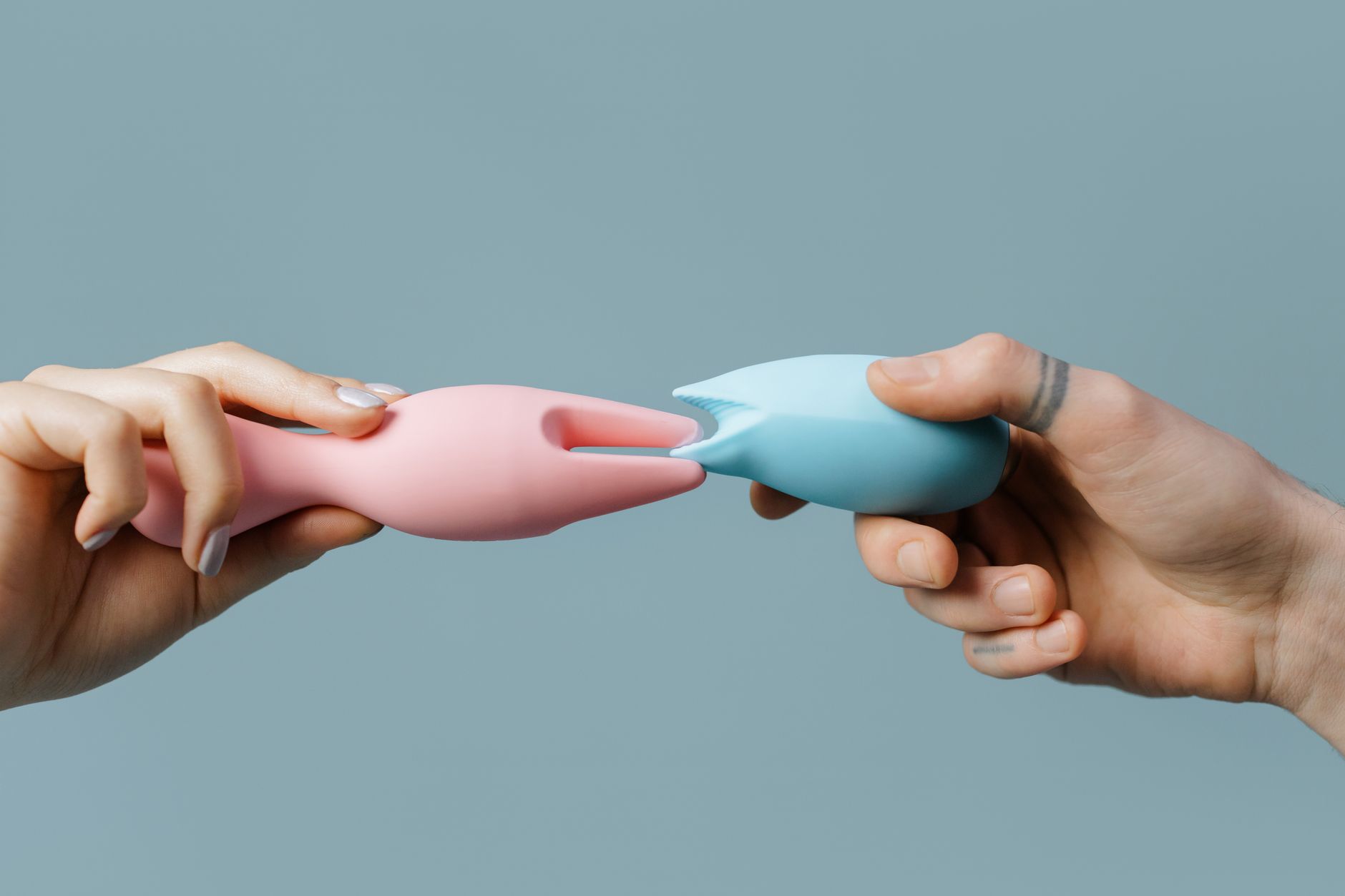
The mismatch nobody talks about openly
Here's the thing about mismatched arousal timelines: it's wildly common, and almost nobody's having an honest conversation about it. One partner climaxes in five minutes. The other needs twenty. Nobody's broken. You're just operating at different speeds, and that gap creates friction that has nothing to do with your bodies and everything to do with shame.
I see this pattern in my office constantly. Partners arrive with a narrative: "They finish too fast" or "I can't come quickly enough." By the third session, we're talking about something else entirely. It's not about pace. It's about feeling unseen.
Why lemon vibrators change the equation
Lemon clitoral vibrators, particularly suction-based devices like the Lem, operate at a frequency that your partner's body can't replicate manually or with conventional penetration. This matters because it decouples your pleasure from your partner's effort.
When your partner's arousal peaks in five minutes and they're trying to synchronize that with your twenty-minute timeline, tension enters the room. You both feel it. They're working harder. You're rushing. The whole experience flattens into something obligatory.
Introduce a lemon vibrator and suddenly the math changes. Your partner can reach climax, experience satisfaction, and you can continue building yours independently. This isn't a consolation prize. It's actually hotter and more intimate than you might think because it requires vulnerability and communication in real time.
Setting the conversation up right
Before you introduce a toy, you need a frame. Not during sex. Not when things feel tense. Pick a calm moment, maybe over coffee or a walk, and name what you've both noticed.
"I've been thinking about how our timelines don't always sync, and I don't want either of us to feel rushed or like something's missing." That's honest without blame.
Then: "I'd like to try using something like a lemon vibrator together. Not because anything's wrong. Because I think it could feel really good and take the pressure off both of us."
The framing matters. You're not asking them to fix you. You're proposing a tool that makes pleasure more accessible for both of you. If they're hesitant, listen to what that hesitation actually is. Often it's not about the toy. It's about fear that they're not enough.
How to introduce the lemon vibrator into partnered sex
Timing is everything. You have roughly three entry points:
During foreplay, before penetration. This is the gentlest introduction. Use the lemon vibrator on yourself while your partner is involved. Touch each other. Make it collaborative from the start. This normalizes the toy as part of your shared pleasure, not a substitution.
During penetration, when your partner's inside you. Many people worry this feels weird. It doesn't. The suction sensation is localized to your clitoris while penetration happens internally. Your partner experiences your arousal differently. Everything intensifies.
After your partner climaxes, while they stay present. This is where speed differences become irrelevant. They've had their satisfaction. Now use the lemon vibrator while they touch you elsewhere. Your neck, your inner thigh, your chest. The toy handles one job. They handle presence. This is genuinely intimate because there's zero performance pressure.
Starting with lower settings
Lemon clitoral vibrators typically have multiple intensity levels. Start at level one or two. I know that sounds cautious, but here's why it matters: intensity isn't the goal. Sensation is. At a lower setting, you and your partner can focus on what feels good without overwhelming your nervous system. You can breathe. You can maintain eye contact. You can actually be present.
Many people skip this step because they assume "higher equals better." False. You can always increase intensity. You can't undo overstimulation. Build gradually. Notice what happens to your body at each level.
The psychological part (which is actually more important)
When your partner chooses to stay present while you use a lemon vibrator, something shifts in your nervous system. You go from performing pleasure for them to experiencing it with them. That's a completely different energy.
For the partner who finishes quickly, this also rewires shame. They're not failing you. They're not leaving you behind. They're creating space for you to fully arrive in your own pleasure without rushing. That's partnership.
Honestly, couples I work with tell me this is when conversations get easier. After sex, when the pressure's off, when everyone's satisfied. That's when people actually talk.
Managing speed mismatches over time
One session with a lemon vibrator won't fix this. What it does is create a template. A way of being together that doesn't require one person to contort themselves into the other's timeline.
Some couples find that once the pressure lifts, timelines start to naturally shift. When you're not rushing, arousal settles into a different rhythm. Others find they like the variation. Sometimes you use the toy together. Sometimes you don't. Sometimes your partner finishes first and sometimes they don't.
The goal isn't sameness. It's removing the shame that accumulates around difference.
When to reach out for more support
If one partner consistently feels resentful about their pace, that's worth exploring outside the bedroom. Speed preference sometimes signals something deeper about how much energy someone's willing to invest in sex. That's a conversation with a couple's therapist, not a vibrator.
If pain emerges during any of this. Stop immediately. How to Rebuild Pleasure After Painful Sex goes deeper into this, but the short version is: pain is information. It means something needs adjusting.
If one partner feels pressured to use a toy they're not comfortable with, that pressure itself is the problem. The tool only works when both people genuinely want to try it.
What couples tell me actually shifts
They're more curious about each other. They talk during sex. They laugh more. They're not performing a timeline. They're building something that fits both of them.
One couple I worked with had been together eight years. The guy finished in minutes. She needed much longer. They'd settled into a pretty perfunctory rhythm. After they introduced a lemon vibrator, she described it this way: "It felt like he actually wanted to see me come. Not just get through it. Really see me." That changes everything.
Your partner's speed isn't a bug to fix. It's just information about their nervous system. A lemon clitoral vibrator gives you both the freedom to honor your own pace while staying connected.
FAQ
How do I bring this up without making my partner feel inadequate?
Frame it as a *"we" exploration, not a "you" problem. "I'd like to try this together" lands completely differently than "we need to fix this." Also, choose your moment carefully. Postfection's not ideal. Neither is midargument. Pick a calm, connected moment.
Will using a lemon vibrator make partnered sex feel less intimate?
The opposite usually happens. When the pressure to sync timelines disappears, people actually stay more present. You're not in your head about whether you're taking too long. You're actually in your body.
What if my partner is worried the toy will replace them?
That fear is real and worth naming directly. "I want you. The toy is an addition, not a replacement." Show them how the toy works. Let them hold it. Let them see it on you. Demystifying it helps. Also, the lemon vibrator works best when your partner is involved. You're not disappearing into solo pleasure. You're building something together.
Can I use a lemon vibrator if I've never had one before?
Absolutely. Start at the lowest setting. Give yourself permission to just explore what it feels like. There's no "should." If you like it, great. If it's not for you, also great. You learned something about your body.
What if the timing still doesn't work out?
It won't always. Some nights you'll both climax at different times even with a toy present. That's fine. The point isn't perfect synchronization. It's removing the shame and performance pressure. Even when timelines differ, you're approaching it together.
Is it normal to feel awkward introducing this conversation?
Completely normal. Vulnerability about pleasure is hard. You're essentially saying "I want more" and "I want it with you." That's real exposure. The awkwardness usually dissolves once you actually try it. Knowledge makes things feel less risky.
The bottom line
Mismatched pace doesn't mean mismatched desire. It means you need a different framework. Lemon clitoral vibrators aren't workarounds. They're actual tools that let both of you arrive at pleasure on your own timeline without the guilt or rush.
If you're curious about exploring this, start the conversation. See what your partner thinks. And remember: the best sex is the sex where both people actually want to be there. Everything else follows from that.
For more guidance on rebuilding connection after specific challenges, check out how to use lemon vibrators when rebuilding intimacy after prolonged stress or explore how lemon vibrators rebuild arousal after hormonal shifts.