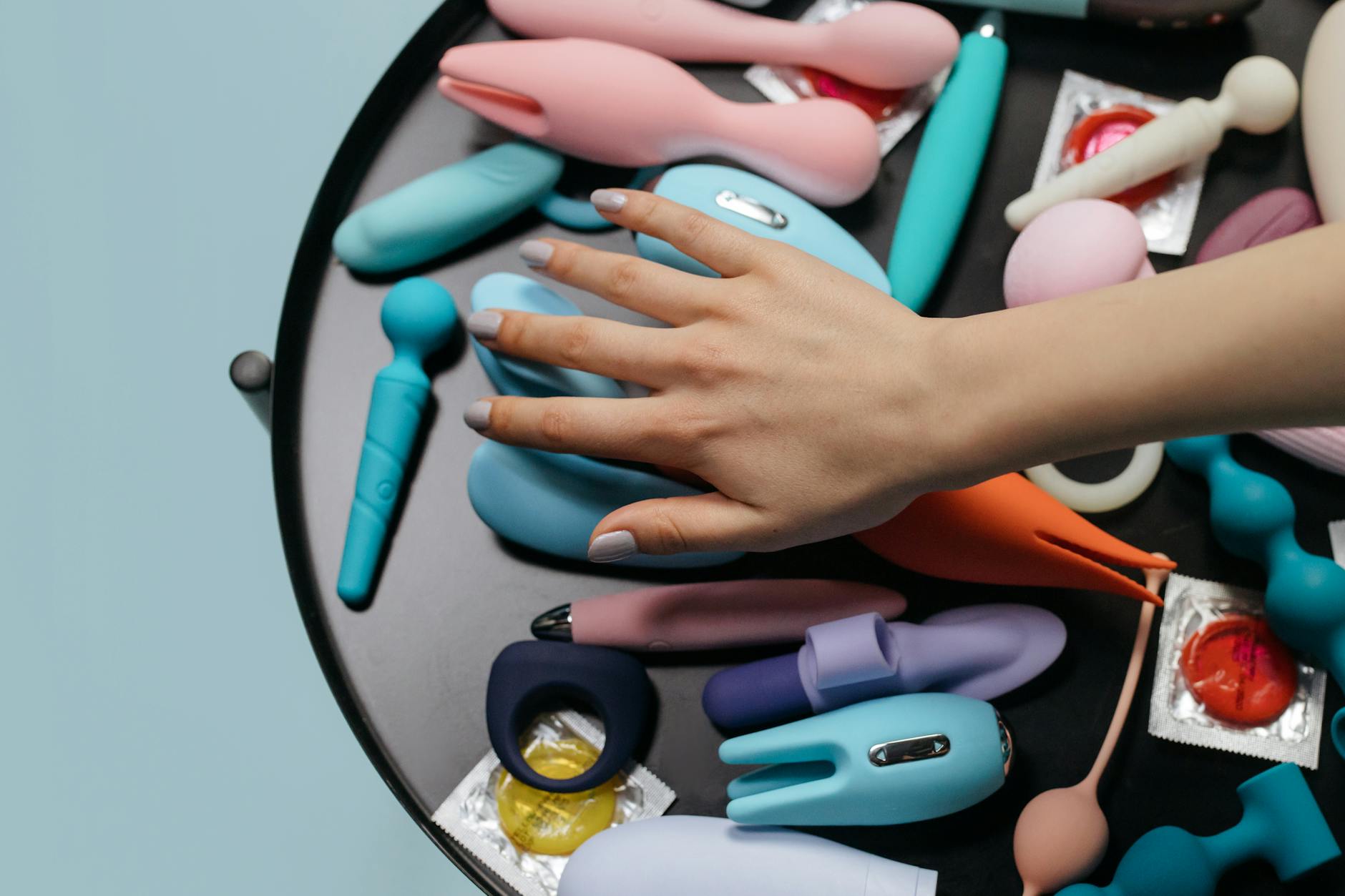
Let's talk about why vibration alone doesn't cut it
You've probably noticed something: the traditional vibrator everyone recommends doesn't actually do much for you. You turn it on, hold it there, and feel... something. Maybe a buzz. Maybe nothing. You're not broken, and your body isn't numb. The tech is just missing the point.
Here's the thing. Clitoral sensitivity is wildly misunderstood. Most people assume the clitoris responds to direct mechanical pressure, so vibrators just shake harder and hope for the best. But that's like trying to hear a conversation by turning up the volume instead of finding the right frequency.
How the clitoris actually responds to stimulation
The clitoris has about 8,000 nerve endings concentrated in a space smaller than a pea. These nerves don't all respond the same way. Some fire up with sustained pressure, some with rhythmic patterns, and some with what's called "pulsatile suction." That last one is what lemon vibrators and suction-based toys actually do. Traditional vibrators mostly ignore it.
When you use a lemon clitoral vibrator, you're not vibrating. You're creating a gentle seal and releasing it in rapid pulses. This stimulates the nerve clusters around the clitoris (not just the tip) in a pattern your body recognizes as fundamentally different from buzzing.
The clinical term is pneumatic stimulation. What it feels like is a softer, more focused sensation that builds pleasure differently than vibration. Many people who thought they had low sensitivity discover they actually have vibration insensitivity once they try a lemon sucker.
Why traditional vibration misses the target
Most clitoral vibrators work through horizontal oscillation. They shake side to side or up and down at speeds between 3,000 and 10,000 hertz. For some bodies, that frequency hits just right. For others, it's too much stimulation too fast, or it causes numbing instead of pleasure.
Here's what I see in my practice: people with sensitive clitorises often avoid vibrators entirely because the sensation feels harsh or overwhelming. Their nervous system is actually more responsive, not less. They need a gentler entry point. That's where the distinction between a lemon vibrator and a standard vibrator becomes transformative.
Lemon adult toys use a different mechanism. Instead of constant vibration, they create rhythmic suction patterns at a lower frequency (usually 50-100 hertz). This slower pulse gives your nervous system time to process each sensation and build arousal gradually. It's like the difference between a jackhammer and a massage.
The role of pressure and timing in clitoral response
Research into sexual response has shown us that the timing between stimulation and rest matters as much as the intensity. Your body needs micro-pauses to register pleasure and build toward orgasm. Traditional vibrators rarely give you that because they run continuously.
A lem vibrator changes this equation. The suction-and-release pattern creates natural breaks in stimulation. Your nervous system gets a beat of recovery between pulses. Over seconds or minutes, this rhythm allows arousal to compound rather than plateau.
I've worked with dozens of couples where one partner felt frustrated because orgasm seemed impossible or painfully slow to arrive. Switching to a lemon sexual toy completely changed the dynamic. The person wasn't broken. They just needed a pattern that matched their nervous system's actual wiring.
Nerve distribution and why location matters
Here's something most toy guides don't explain clearly: the clitoris extends inside your body. What you see externally is only the glans (the tip). The clitoral body and crura extend deep into the vulva, and these internal structures have just as many nerve endings as the tip.
When you use a lemon clitoral vibrator, the suction motion engages the entire clitoral region, not just the visible part. Traditional vibrators, by contrast, tend to numb the very tip if you hold them in one spot for too long. This is why many people report feeling more sensation when they move a traditional vibrator around constantly. With a suction toy, you can stay put and feel increasingly intense sensation.
This is also why switching from a traditional vibrator to a lemon sucker often feels like discovering sensation you thought you'd lost.
Individual variation and why one size doesn't fit
Clitoral sensitivity isn't a fixed trait. It changes across your cycle, with your stress levels, with age, medications, and relationship status. What works beautifully one month might feel off the next. Many people assume this means they're doing something wrong. They're not.
This is why having options matters. A lemon vibrator works brilliantly for some people and feels mediocre for others. The same is true of traditional vibrators. The key is knowing why you might prefer one approach over another so you can make an intentional choice instead of guessing.
If you've tried traditional vibrators and felt frustrated, it's worth testing pneumatic stimulation to see if it clicks for you. If you use a lemon sexual toy regularly, you already know the difference. The suction mechanism creates a distinct sensation profile that bypasses the numbing that can happen with constant vibration.
How to transition if vibration has been your go-to
If you're used to a traditional vibrator, switching to a lemon clitoral vibrator might feel strange at first. The sensation is quieter, more focused, and less immediately intense. This isn't a drawback. It's actually an advantage if you've been chasing bigger and bigger sensations to feel anything.
Start with the lowest setting. Many people jump straight to high intensity out of habit, then dismiss the toy because it doesn't feel "strong enough." With suction-based stimulation, patience and progression work better than power from the start.
Give yourself at least three sessions before deciding. Your body learns new sensations gradually. What feels underwhelming in week one often becomes your favorite approach by week three.
You might also notice that you orgasm differently with a lemon vibrator than with traditional toys. This is normal. The different stimulation pattern can shift the type of orgasm you experience, often creating longer or more intense sensations. This isn't better or worse. It's just different, and many people find it deeply satisfying once they adjust.
The science of arousal and why pattern beats power
Your sexual response isn't just physical. Your nervous system has a predicted pattern it expects, and pleasure happens when reality matches prediction. If you use a vibrator that delivers constant maximum stimulation, your nervous system adapts to it (this is called habituation). Sensation flattens even though the toy is still running at full power.
A lemon sucker works around this because the pattern itself is inherently variable. Each pulse is predictable enough to feel safe, but the suction-and-release rhythm prevents pure adaptation. Your nervous system stays engaged because there's something to register in the pause between pulses.
This is why people often report that a lemon clitoral vibrator feels more effective even at lower speeds than their old vibrator at maximum settings. The pattern is doing more work than the power ever could.
Why sensitivity isn't the whole story
I want to be clear about something: choosing a lemon vibrator over a traditional one isn't about sensitivity levels. It's about fit. Some highly sensitive people love traditional vibrators and can't stand suction toys. Some people with lower sensitivity feel everything with a lemon clitoral vibrator and nothing with a traditional wand.
The real difference is this. If you've been frustrated with traditional toys, if you've felt numb or overstimulated, or if you've wondered whether pleasure is actually possible for you, it's worth experimenting with the suction mechanism. Many people discover that the problem wasn't their body. It was the technology.
The lemon vibrator exists because that discovery kept happening independently across thousands of users. People weren't finding pleasure with their old toys, they tried pneumatic stimulation, and suddenly their entire relationship with pleasure changed.
FAQ: Your questions about lemon vibrators versus traditional toys
Are lemon vibrators actually less intense than traditional vibrators?
Not necessarily. Intensity depends on the pattern, not just the raw frequency. A lemon clitoral vibrator can feel extremely intense because the suction concentrates stimulation into a small focused area. Traditional vibrators spread stimulation across a wider surface, which can feel gentler even at higher power levels. If you need strong sensation, a lemon vibrator set to a higher pattern often delivers it more effectively.
Can I use a lemon sexual toy if I'm on medications that affect sensation?
Often yes. If you're taking medications that dull sensation, the targeted nature of suction stimulation sometimes breaks through where traditional vibration doesn't. That said, every medication is different, and what works for one person might not work for another. Start with lower patterns and give yourself time to see what happens.
Do I need to use lubricant with a lemon vibrator the way I don't with traditional vibrators?
Not always, but lubrication can enhance sensation. The suction mechanism creates its own gentle seal, so you don't need slippery conditions the way vibration sometimes requires. That said, if your tissue is sensitive or if you like the feeling of extra glide, water-based lubricant works perfectly with a lem vibrator and can actually intensify the sensation.
If I've never had an orgasm with a vibrator, would a lemon clitoral vibrator be better to start with?
It depends on your body, but it's worth trying. When you're returning to pleasure after years without it, starting with a pattern-based approach sometimes feels less intimidating than traditional vibration. The suction sensation often registers as more natural to your body's own arousal patterns. If you haven't found pleasure with other toys, a lemon sucker is worth the experiment.
How does a lemon vibrator compare if I mostly prefer indirect clitoral stimulation?
A lemon clitoral vibrator can be used both directly and indirectly. You can place it over the clitoral hood for gentler sensation, or move it slightly to the side to stimulate the surrounding tissue. Many people who prefer indirect touch find that the suction mechanism works beautifully this way because it's gentler on direct contact than traditional vibration would be.
Can I use a lemon vibrator with a partner, or is it just for solo play?
Yes, absolutely. Many couples use lemon vibrators together. The quieter operation and targeted sensation make it feel more intimate than some traditional vibrators. Some partners appreciate being able to hold it together or take turns controlling it. The suction pattern also allows for different levels of intensity without it feeling chaotic or unpredictable.
The bottom line
If traditional vibrators have left you feeling numb, frustrated, or underwhelmed, the issue almost certainly isn't your body. It's the mismatch between the stimulation pattern and your nervous system. A lemon clitoral vibrator works through a fundamentally different mechanism. Suction-based stimulation reaches nerve clusters that vibration misses, creates a pattern your body recognizes as distinct, and often allows sensation to build more naturally.
You don't need to abandon vibrators entirely. But if you're looking for something that works differently, a lemon vibrator might be exactly what clicks. Give it three sessions. Start low. Pay attention to what feels different. Your body might surprise you with what becomes possible once you find the right approach.
Questions about how to use these tools or whether they're right for your situation? Reach out.